Continuous Side Engagement
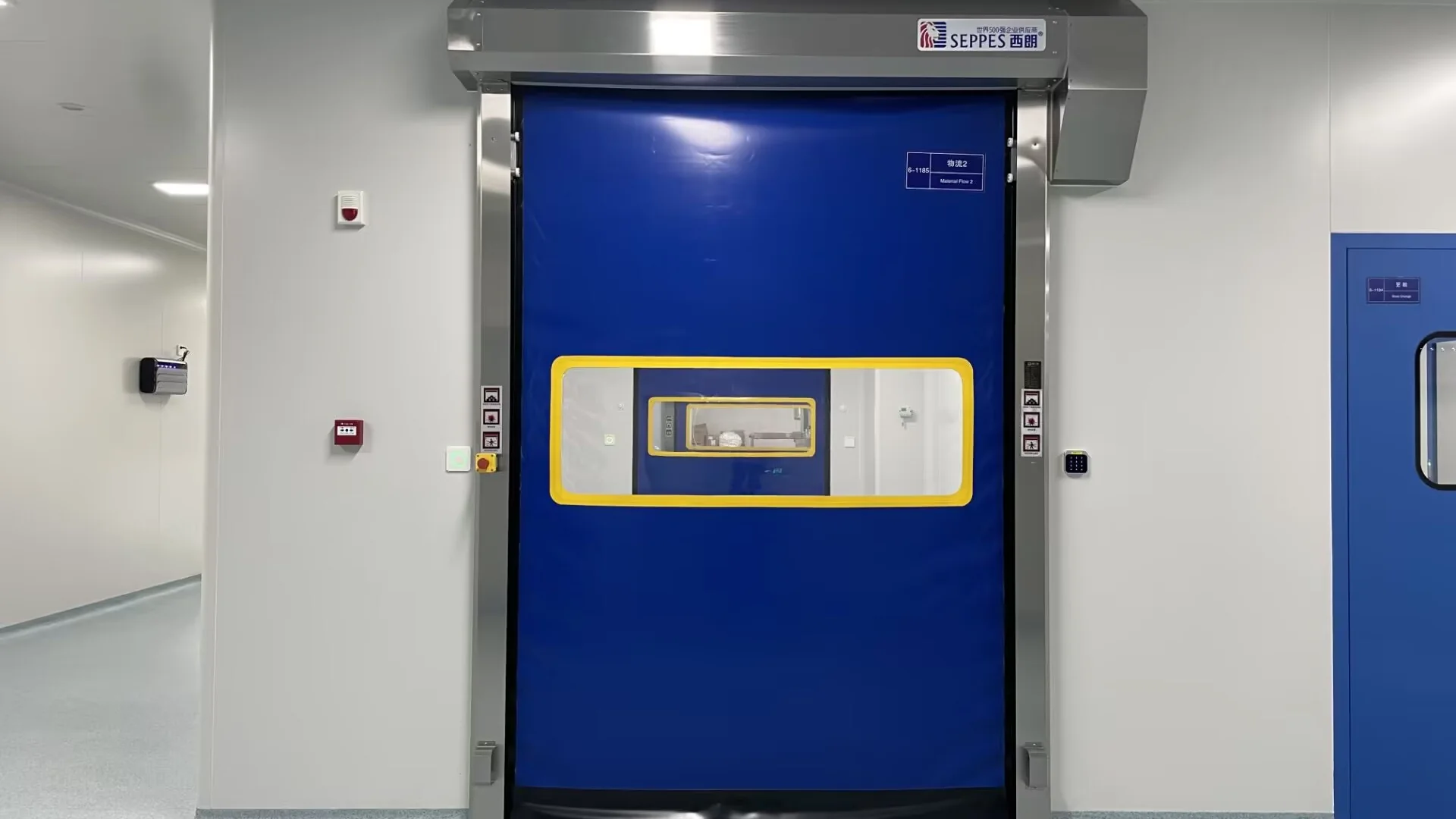
The curtain edge engages inside the shaped guide for controlled perimeter retention.

High Speed Doors · Interlocking Guide System
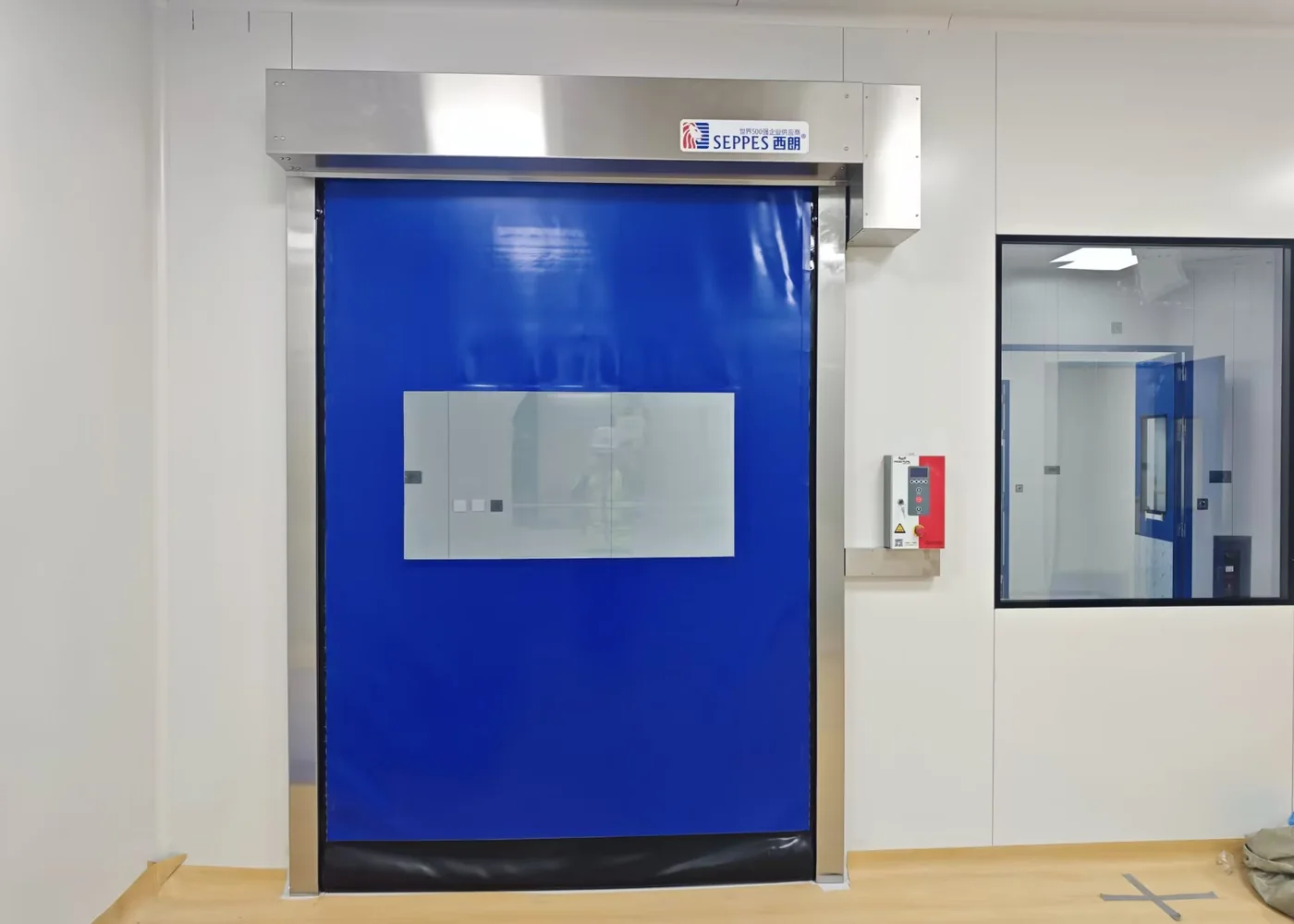
Rapid flexible access with interlocking curtain-edge guides for controlled production, cleanroom and high-frequency internal routes.
Controlled access
The shaped curtain edge runs inside matching side tracks. This creates a continuous mechanical relationship between the flexible curtain and guides when closed. On suitable configurations, the door can guide a displaced curtain back into the tracks during a following cycle. Final sealing, pressure and recovery performance depend on the selected model, size and site conditions.
Review technical data Read the cleanroom selection guide Compare zipper and brush guidesThe curtain edge engages inside the shaped guide for controlled perimeter retention.
Automatic opening and closing can reduce waiting and unnecessary open time on frequent routes.
Suitable configurations can reinsert a displaced curtain edge and help restore operation after inspection.
Activation, access permissions, interlocks and equipment signals can be planned around the workflow.
Product details
A closer look at the components behind reliable movement, sealing and protection.
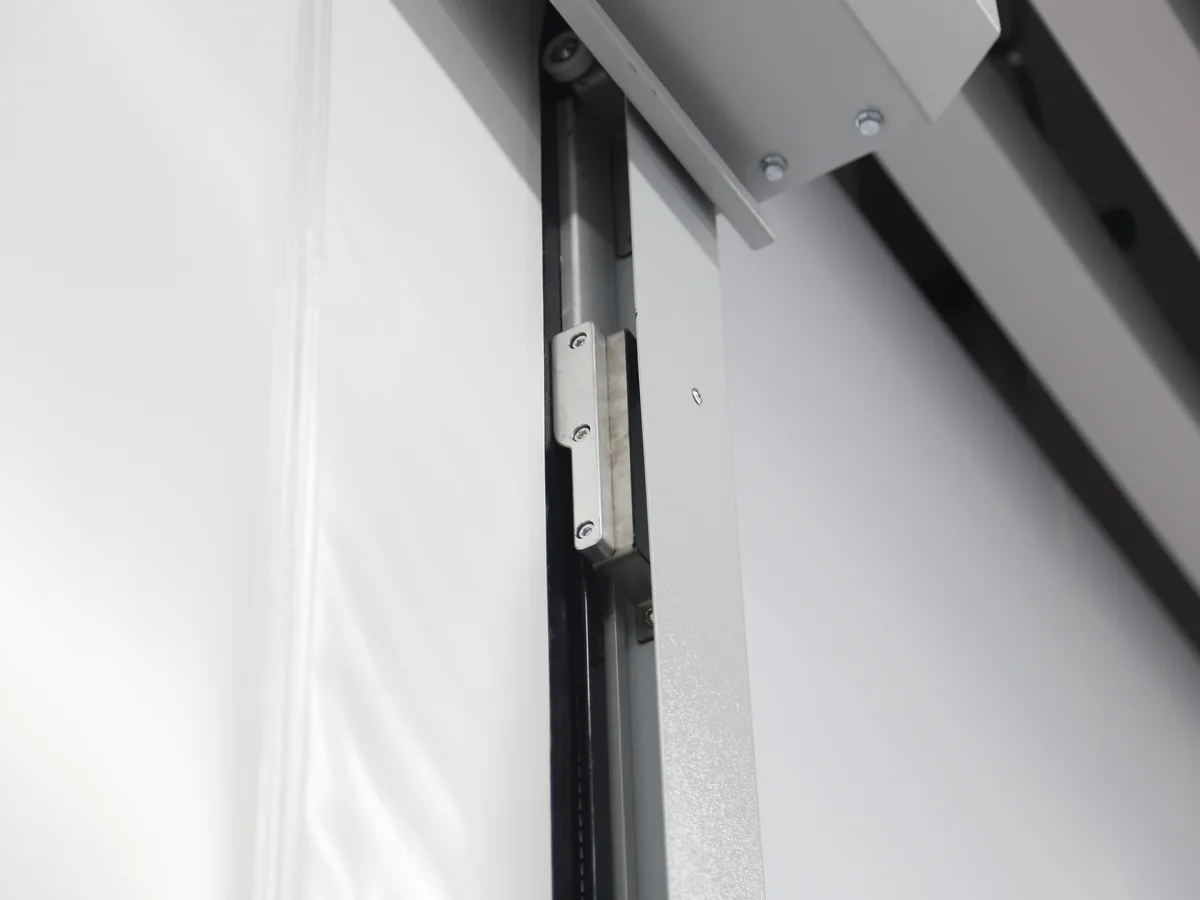
The shaped curtain edge travels inside the matching guide to retain the flexible curtain along both sides of the opening.
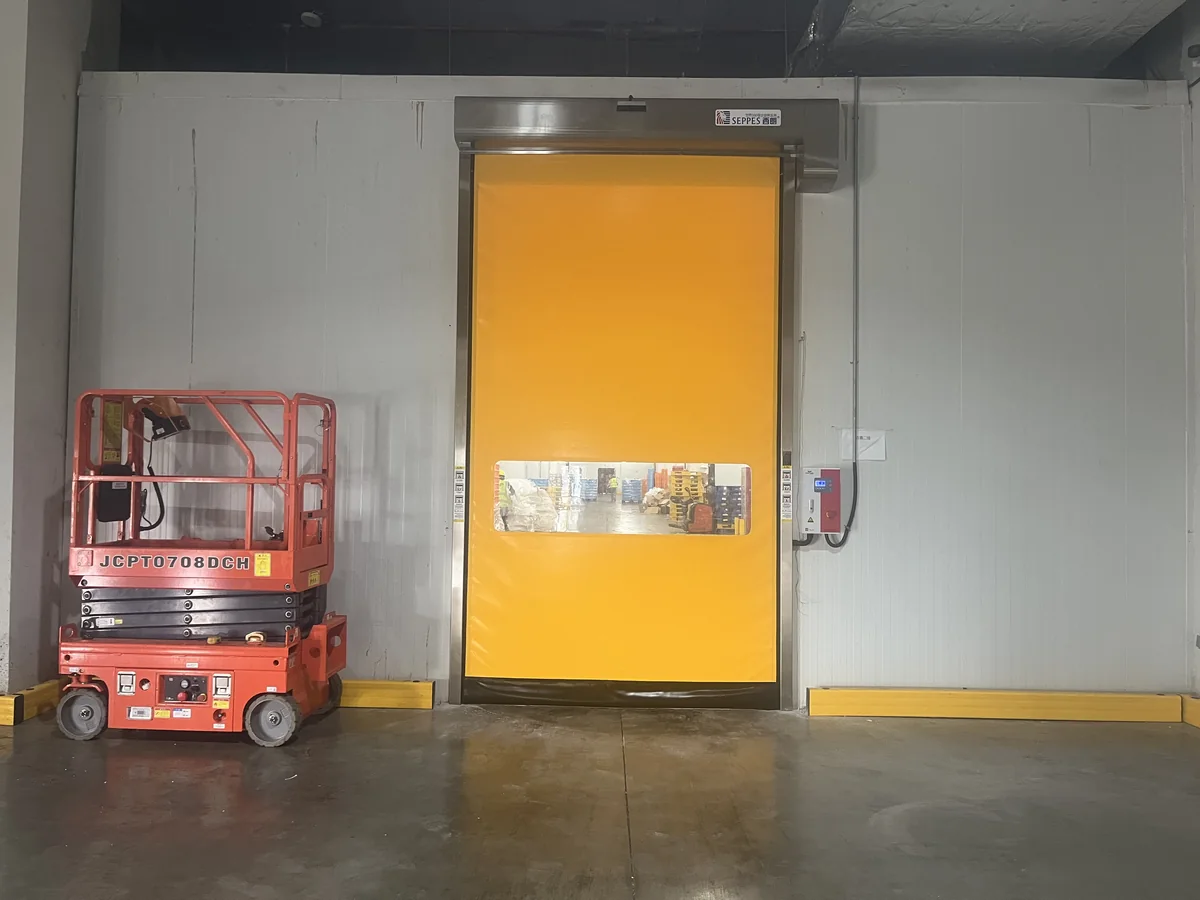
A project-selected curtain and reinforced edge work with the guide geometry for frequent automatic movement.
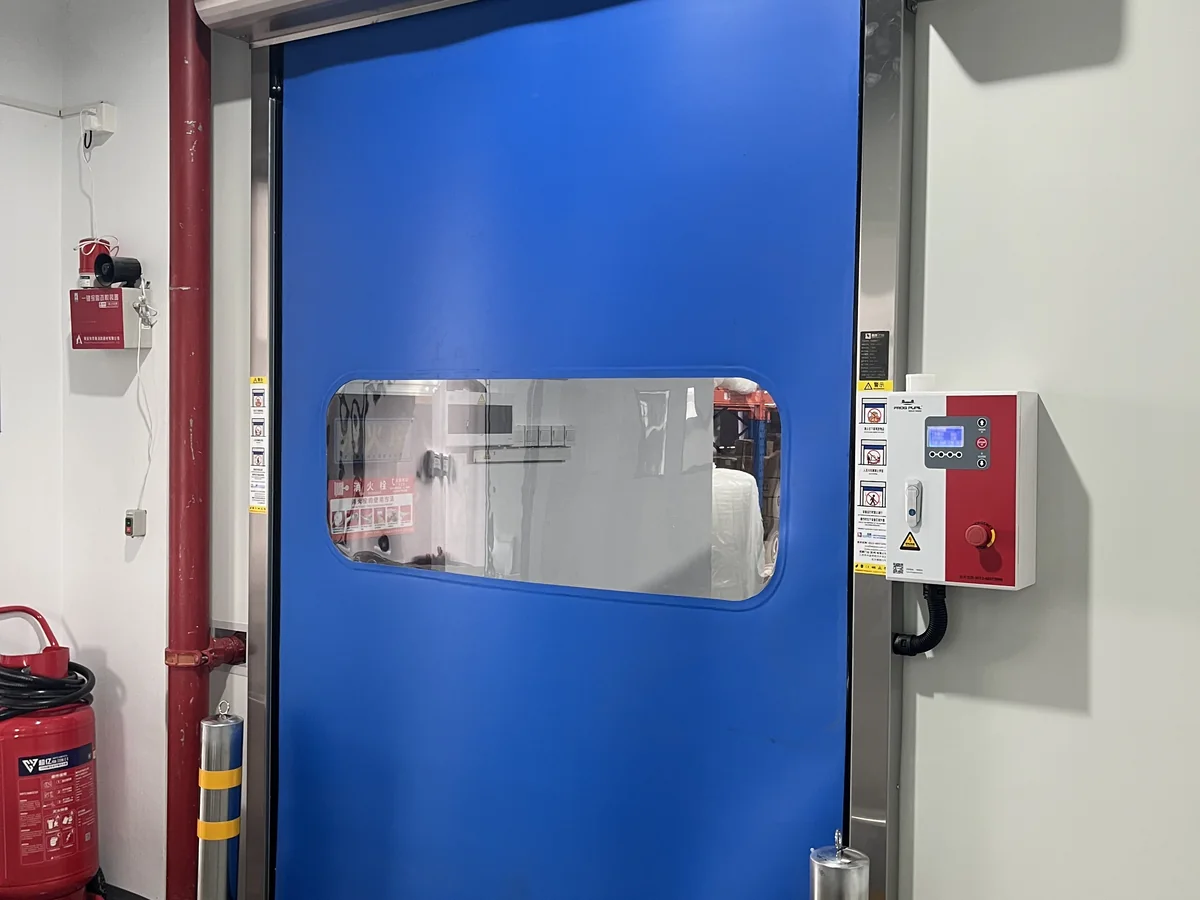
The lower edge is configured around safe closing, floor conditions and the required environmental boundary.
Working principle
The motor raises the flexible curtain while shaped edges travel through matching side guides. The controller coordinates activation, safety sensing and the closing sequence for the agreed route.
Radar, pull cord, access control or an agreed machine signal requests opening.
The drive lifts the flexible curtain to clear the planned traffic envelope.
Selected sensors monitor the passage and coordinate safe closing behaviour.
The curtain returns through the zipper guides; suitable recovery designs can reinsert a displaced edge.
Project planning
A reliable configuration starts with verified site conditions, operating requirements and the intended workflow.
System and parameters
The final door is configured around the opening and project requirements. Confirm all quantitative performance and options in the approved technical proposal.
Performance depends on the selected size, construction, controls and installed conditions. Request model-specific drawings and evidence where pressure or leakage criteria apply.
Typical applications
Typical projects include controlled production, food and pharmaceutical areas, electronics, packaging and automated material routes. The door supports the boundary but does not replace the facility HVAC, validation or traffic-safety strategy.
Configure the system around the opening, traffic pattern, building conditions and safety requirements.
Configure the system around the opening, traffic pattern, building conditions and safety requirements.
Configure the system around the opening, traffic pattern, building conditions and safety requirements.
Configure the system around the opening, traffic pattern, building conditions and safety requirements.
Application examples
These examples show common application directions. Final configuration depends on the verified opening, traffic pattern and operating environment.
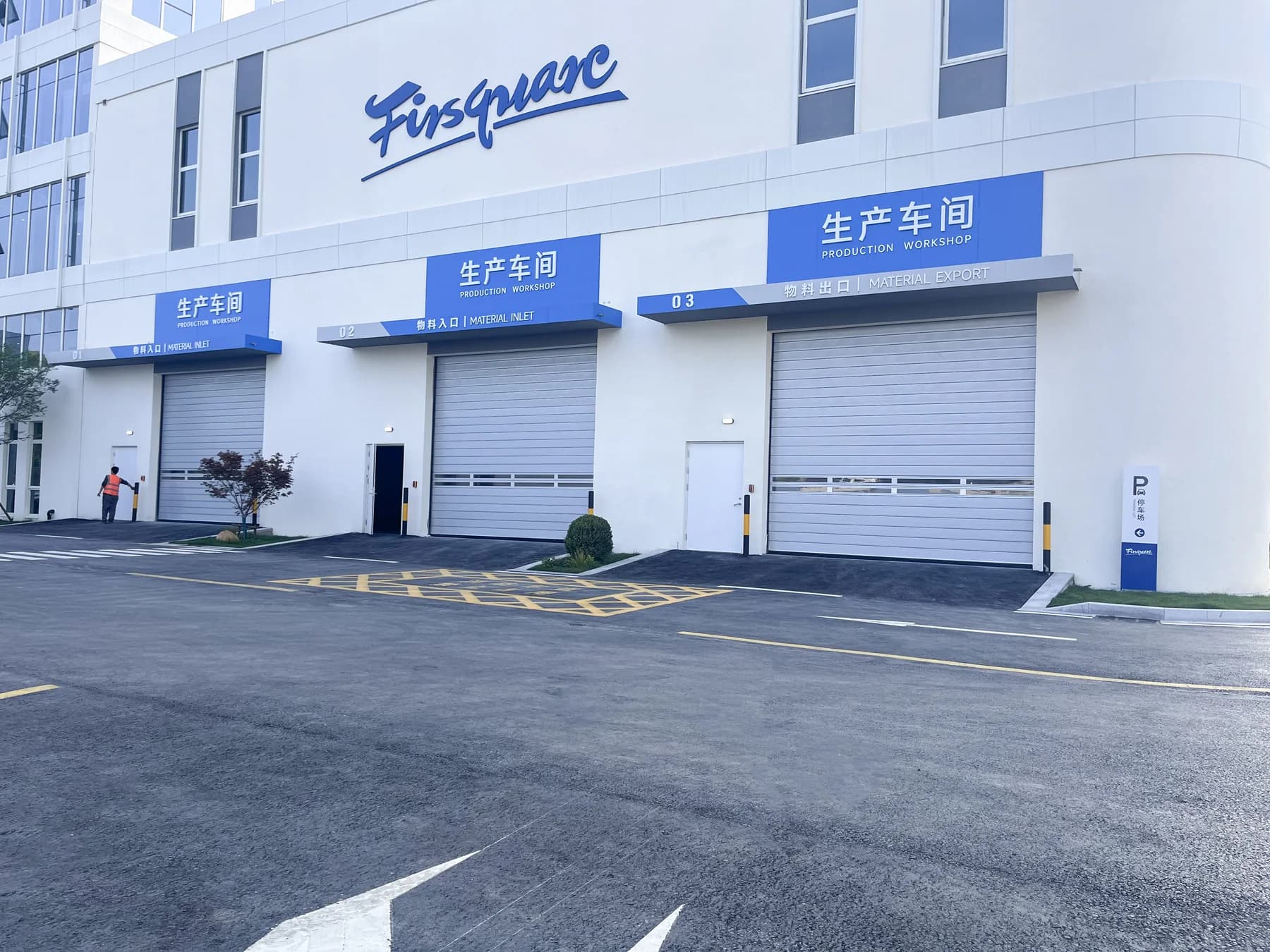
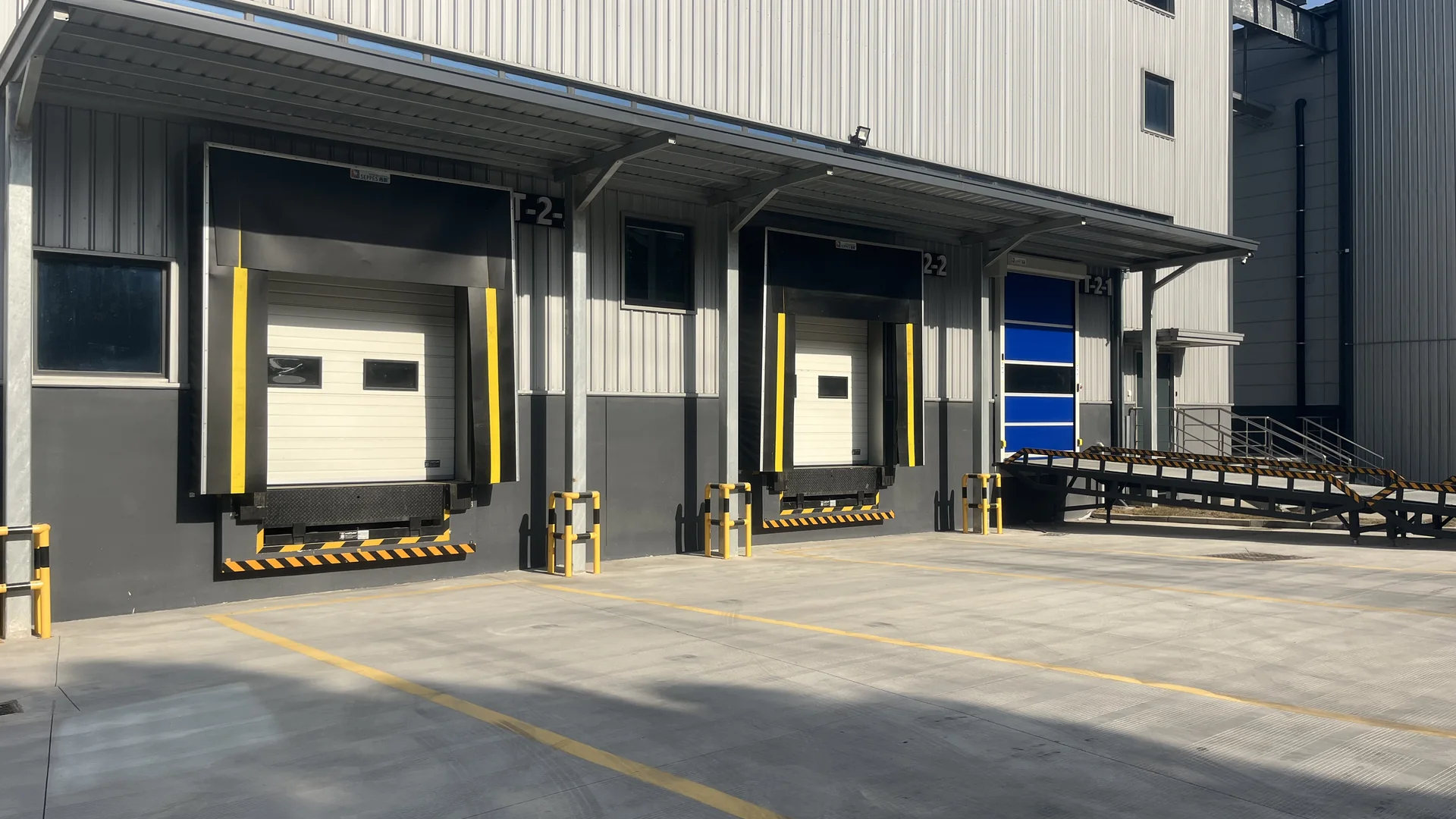
Rapid automatic movement and zipper side guides support frequent movement across a controlled-room boundary.
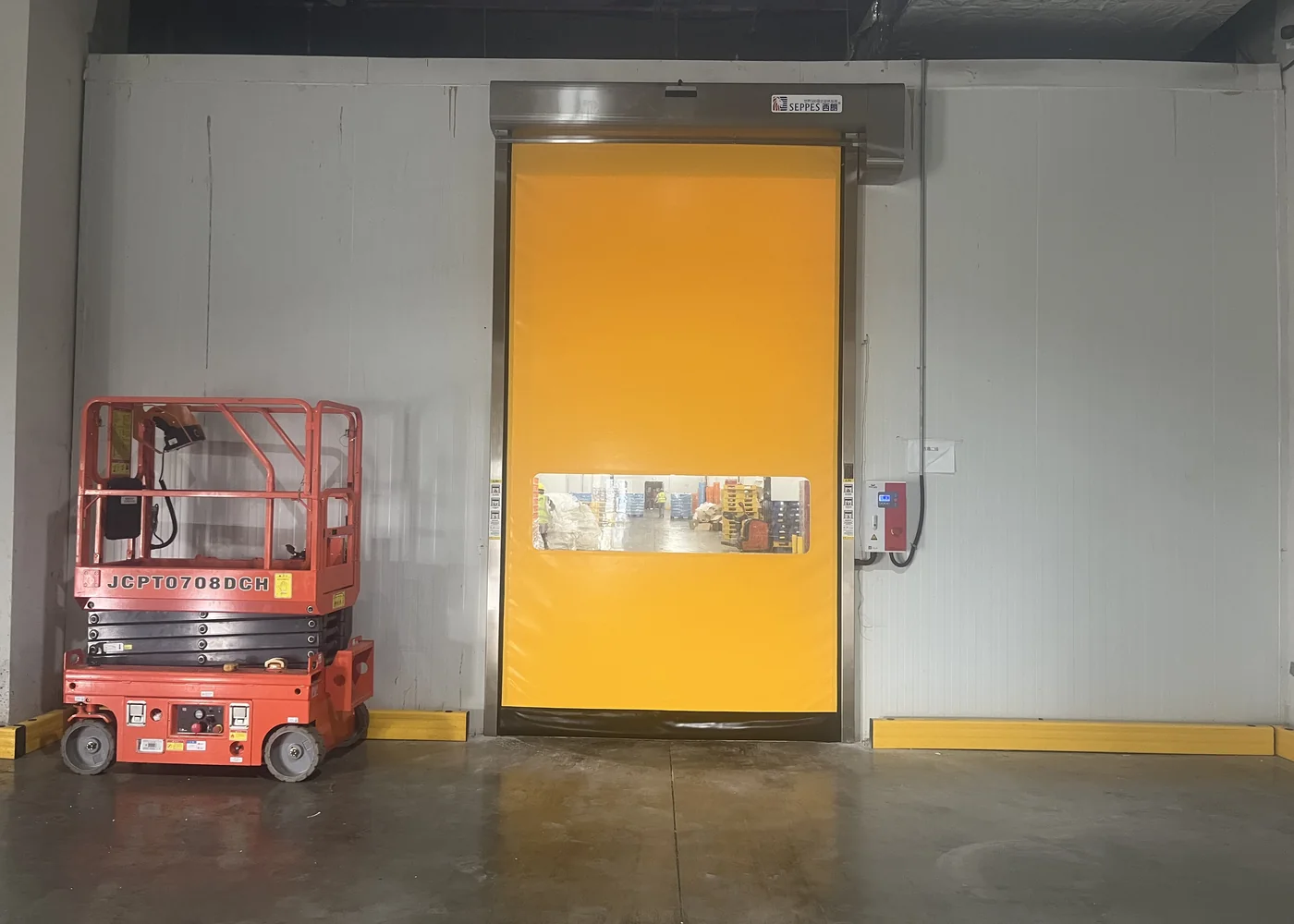
A flexible curtain and configurable detection support repeated traffic between adjacent industrial zones.
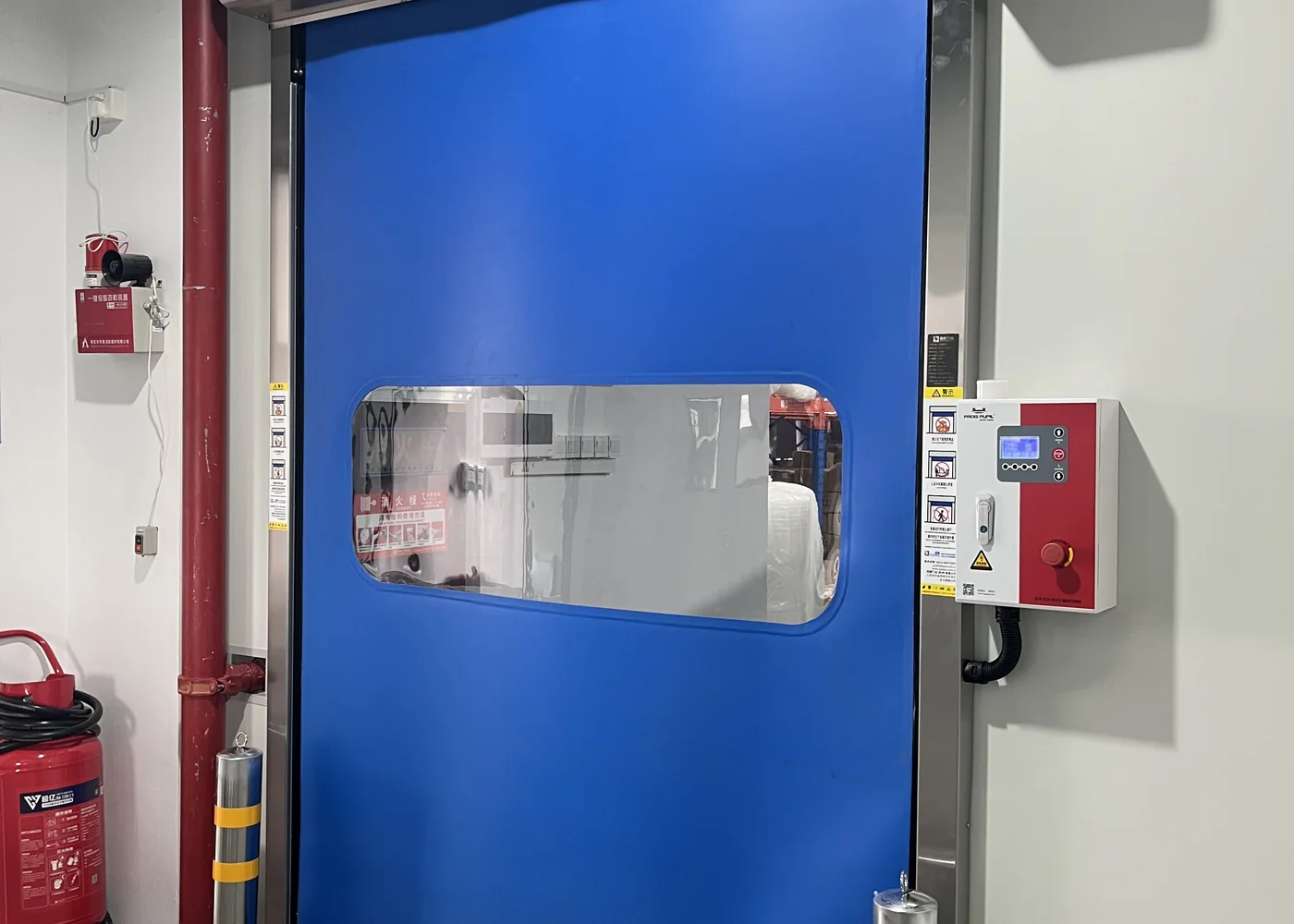
The opening, controls and recovery method can be planned around equipment, people and material movement.
Manufacturing and support
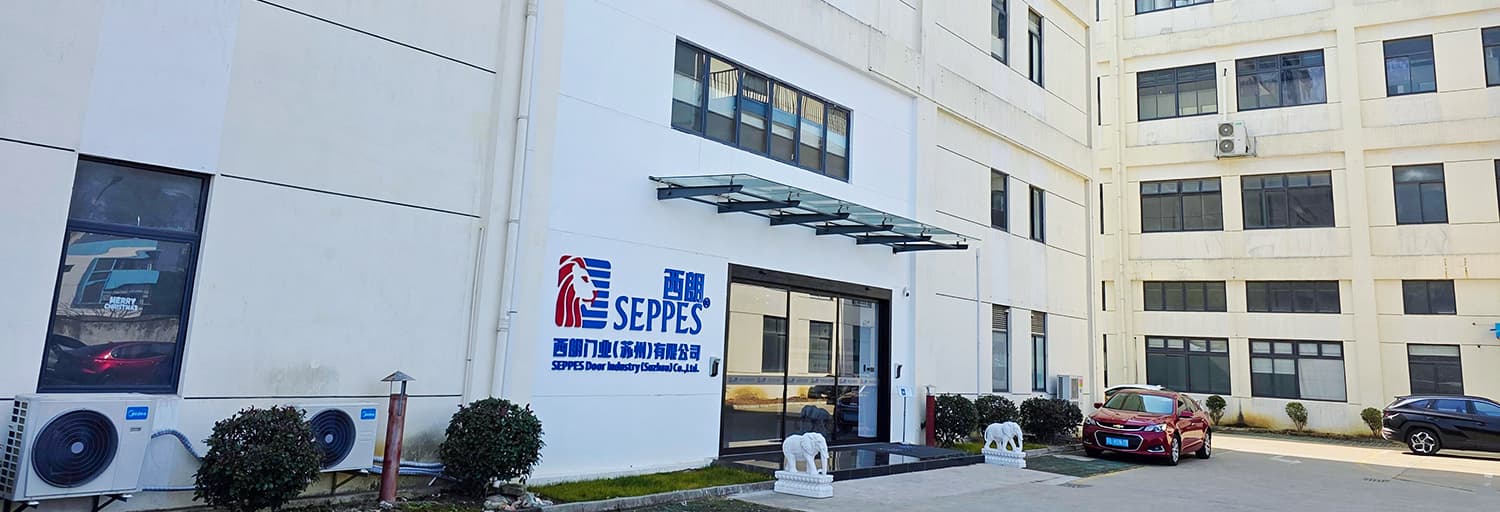
SEPPES coordinates opening review, customized production, inspection, packaging, technical documents and remote support for global industrial projects.
FAQ
Use these answers for early planning, then confirm the final configuration in the project proposal.
Do not infer an airtightness class from the guide name alone. Confirm leakage or pressure evidence for the selected size, curtain, guides, seals and test conditions.
Some configurations can guide a displaced curtain edge back into the tracks during a later cycle. Confirm the recovery function in the proposal and inspect the curtain, guides and safety devices after impact.
It can support frequent cleanroom access when materials, pressure behaviour, cleaning, controls and validation requirements are defined. The door does not establish cleanroom performance by itself.
Yes, when included in the project controls. Define permissions, timeouts, fault response and emergency release before production.
Send opening dimensions, room use, traffic, operating frequency, environmental objective, cleaning method, pressure information, control logic, project location, photos and drawings.
Project consultation
Share the dimensions, quantity, application, project location and available photos or drawings.
Prepare your inquiry
Send the details you already have and identify the decisions that are still open.
Continue on WhatsApp