
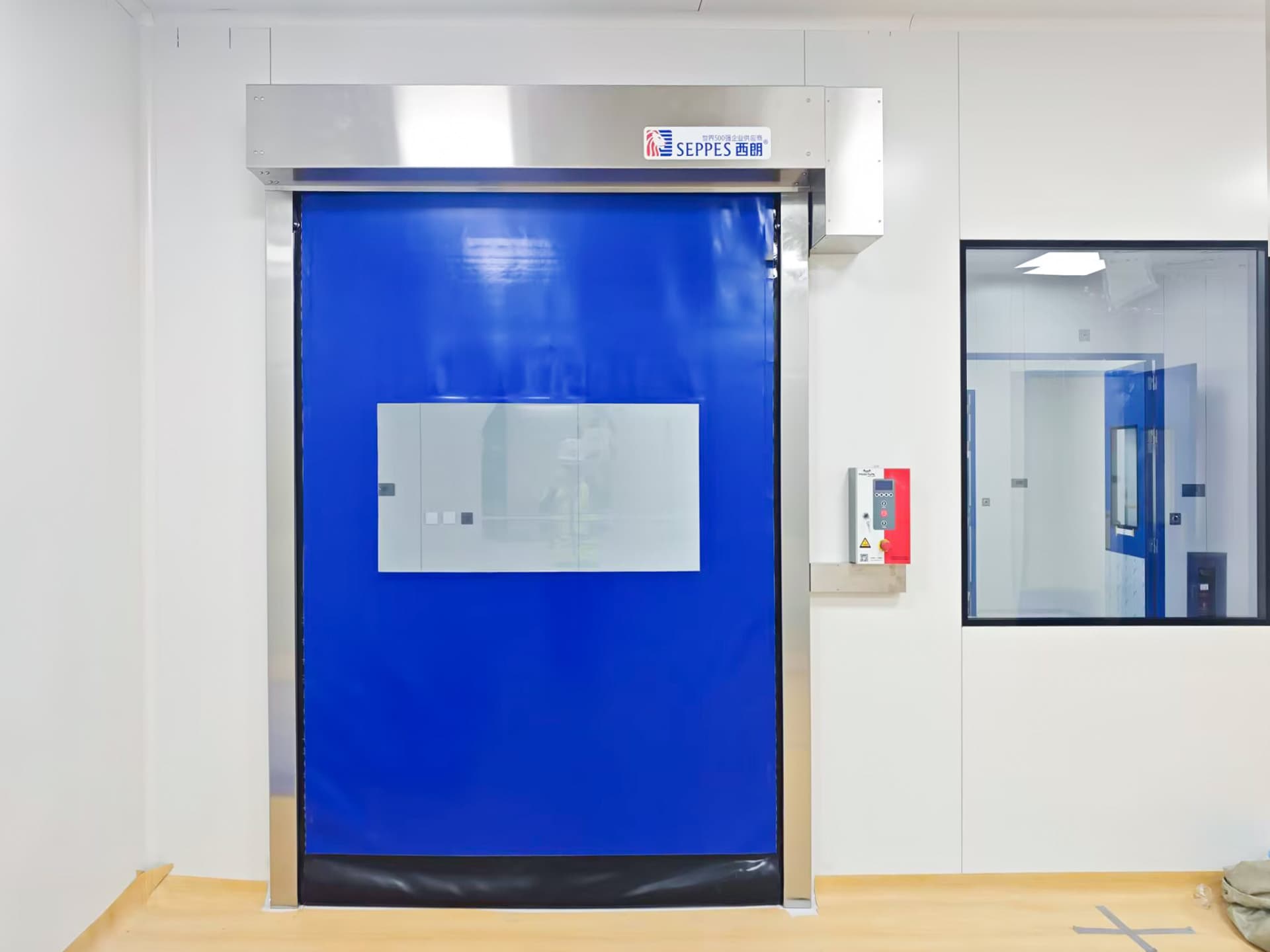
Zipper and brush-sealed high-speed doors use different side-guide principles. A zipper design retains the curtain edge inside an interlocking guide and is usually considered where tighter perimeter control or impact recovery matters. A brush-sealed design guides the curtain beside replaceable brushes and is often suitable for general production and logistics traffic. The correct choice depends on the verified environmental boundary, traffic and maintenance plan.
Quick answer
What is the difference between a zipper and a brush-sealed high-speed door?
The main difference is how the curtain edge engages the side guides. A zipper door locks the curtain edge into a shaped track, which can support tighter closure and, on suitable models, self-reinsertion after an impact. A brush-sealed door uses side brushes around a guided curtain, offering practical separation for many internal factory routes. Choose by required sealing evidence, traffic risk, cleaning, wear parts and recovery needs.- Zipper guide
- Interlocking curtain edge
- Brush guide
- Replaceable side brushes
- Choose by
- Boundary + traffic + recovery
- Verify
- Selected model and test scope
Start with the boundary, not the guide name
The doorway connects two operating zones every time it opens. Before comparing guide systems, define what the boundary must control: unnecessary air exchange, dust movement, insects, odours, temperature, room pressure or access time. Also record how often the door operates and whether people, forklifts or AGVs use the route.
A high-speed door shortens the open interval and provides a physical closure when shut. It supports the facility's environmental strategy; it does not replace ventilation, extraction, filtration, fire protection or operating procedures.
How brush-sealed side guides work
In a brush-sealed high-speed door, the flexible curtain travels within side guides while brush strips help close the gaps around the curtain edges. The arrangement is straightforward to inspect, and worn brush strips can usually be replaced without changing the complete door.
This construction is commonly considered for internal production and logistics routes where frequent access and practical separation are the main goals. Final suitability still depends on opening size, airflow, traffic and the selected curtain-retention design.
- Useful for many general factory, warehouse and equipment-access routes.
- Brush condition is visible and can be included in routine inspection.
- The proposal should identify curtain retention, wind reinforcement and safety devices separately.
How zipper side guides work
A zipper-sealed high-speed door uses a shaped curtain edge that engages continuously with the side track. This creates a more enclosed guide interface than a conventional brush arrangement. On self-reinserting configurations, a curtain displaced by an accidental impact can be guided back into the tracks during an authorized operating cycle.
Zipper guides are often evaluated for controlled rooms, clean production areas and routes where impact recovery is valuable. These applications require a model-specific review: the guide style alone does not prove leakage performance, cleanroom suitability or recovery after every type of damage.
- Discuss where tighter side engagement supports the environmental boundary.
- Confirm whether self-reinsertion is included in the proposed configuration.
- Agree inspection and isolation procedures after a vehicle or load strikes the curtain.
Zipper vs brush: a practical comparison
Use this table to prepare the technical discussion. It describes selection tendencies rather than universal ratings; ask for product-specific drawings and evidence for the configuration offered.
| Decision point | Brush-sealed guide | Zipper guide |
|---|---|---|
| Side engagement | Curtain guided beside replaceable brushes | Curtain edge retained in an interlocking track |
| Typical starting point | General internal production and logistics access | Controlled areas or impact-prone internal routes |
| Environmental review | Confirm required separation and airflow conditions | Confirm required leakage or pressure evidence |
| Impact recovery | Depends on the curtain-retention design | Self-reinsertion may be available on the selected model |
| Wear items | Brushes, curtain, bottom and safety edges | Curtain edge, tracks, seals, bottom and safety edges |
| Maintenance question | How are brushes inspected and replaced? | How are tracks inspected and the curtain reinserted? |
Five checks before you specify either door
The guide system is one part of the entrance. Review the complete door and the installed operating sequence before placing an order.
- Define the opening, available headroom and side room, support structure and nearby obstructions.
- Record people, forklift or AGV routes, daily duty and peak operating periods.
- State the environmental objective and provide pressure, temperature or cleaning information where relevant.
- Agree activation, closing delay, safety functions, equipment interfaces and fault recovery.
- Request applicable drawings, model-specific evidence, wear-part identification and the site acceptance plan.
Match the door to the actual application
A brush-sealed high-speed roll-up door is often a sensible starting point for a frequent internal route whose main needs are shorter waiting time and general separation. A zipper design deserves closer review where the curtain needs more continuous side engagement, where vehicle contact is a foreseeable risk or where a controlled-area strategy calls for a tighter boundary.
For an exposed exterior opening, large span, higher security demand or stronger thermal boundary, compare the requirement with a rigid high-speed or industrial sectional door instead of forcing either flexible-curtain option into the wrong duty.
Plan the configuration with SEPPES
SEPPES manufactures configurable high-speed door systems for production, warehousing, logistics and controlled-area projects. The engineering review can coordinate the guide system, curtain, activation, safety devices, control interfaces and project documentation around the confirmed application.
Send the opening dimensions, quantity, application, traffic, operating frequency, environment, cleaning method, control requirements, project location and available photos or drawings. Where sealing or pressure performance matters, include the required criterion and evidence scope in the enquiry.
Zipper and Brush-Sealed Door Questions
Which high-speed door seals better: zipper or brush?
A zipper guide generally provides a more continuous side engagement than a brush arrangement, but the required performance must be verified for the selected door size, construction and test conditions. Do not infer an airtightness class from the guide name alone.
Does every cleanroom need a zipper high-speed door?
No. Start with the room classification, pressure strategy, traffic, cleaning method and project validation plan. A zipper guide may be appropriate when the doorway requires tighter perimeter control, but the door does not establish cleanroom performance by itself.
Can a zipper high-speed door repair itself after an impact?
Some zipper-door configurations can guide a displaced curtain back into the tracks during the next operating cycle. Confirm that this function is included in the proposed model, define the permitted recovery procedure and inspect the curtain and guides after an impact.
Are brush strips and zipper guides maintenance-free?
No. Brushes, curtain edges, guide components, seals and safety edges are wear items or inspection points. Ask how each part is inspected and replaced, which spares are available and whether replacement interrupts the route.
What information does SEPPES need to recommend a door?
Provide the opening dimensions, quantity, application, traffic type, operating frequency, environmental objective, cleaning method, pressure information where relevant, control requirements, project location and available photos or drawings.
FROM REQUIREMENTS TO CONFIGURATION
Bring your project into focus.
Share the opening dimensions, quantity, application, traffic, environment, controls, location and available drawings.
Discuss your requirementsRelated solution