
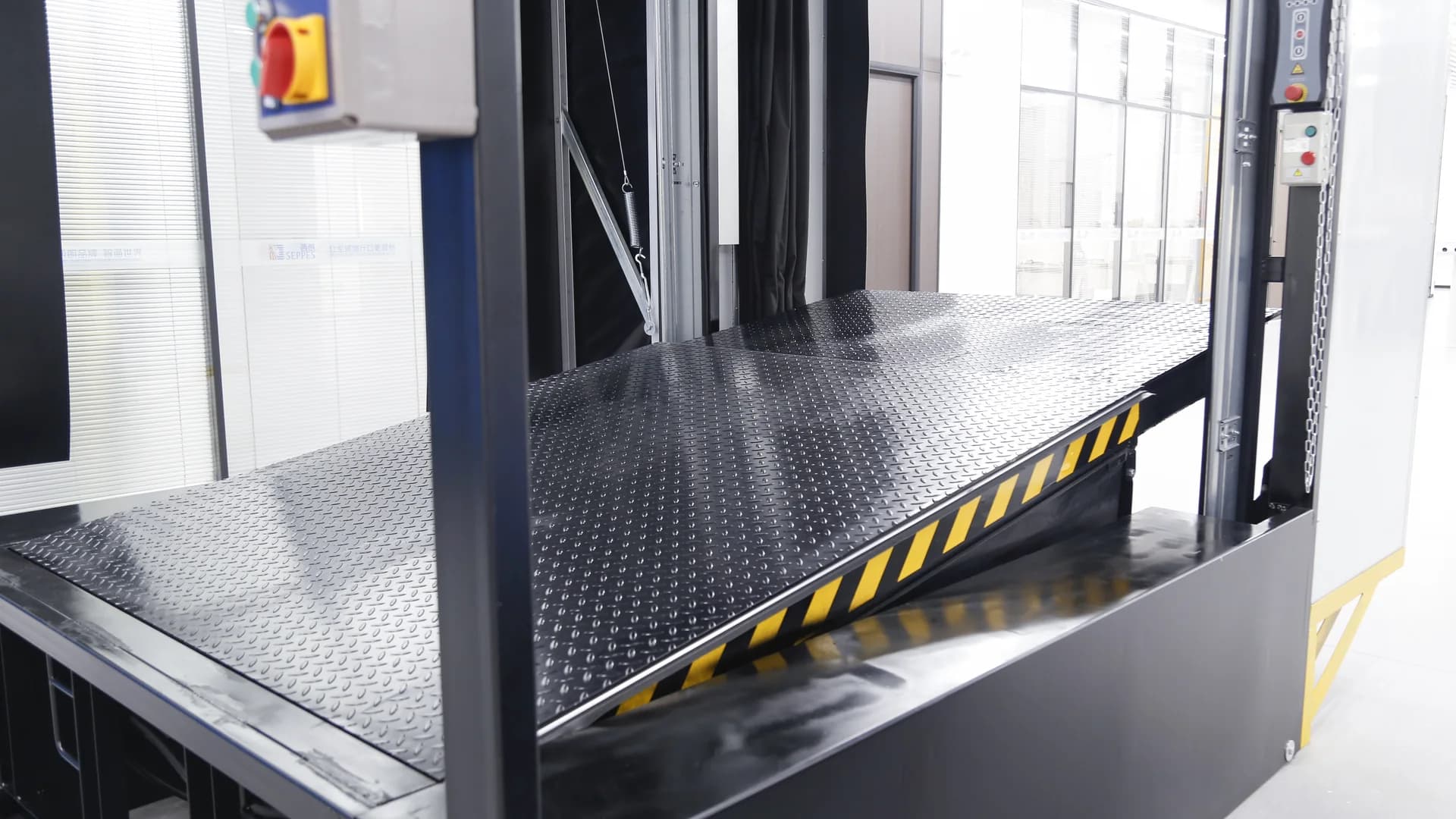
Choose a hydraulic dock leveler by checking the building pit, vehicle bed-height range, lip reach, forklift and goods load, traffic frequency and the complete loading sequence. The platform must bridge the real height and distance safely; a nominal capacity or deck size alone does not prove that it fits the application.
Quick answer
What information is needed to choose a hydraulic dock leveler?
Provide the pit dimensions and structure, dock height, vehicle types and bed heights, required overlap, forklift and maximum goods load, daily traffic, available power, door and shelter arrangement, safety controls and project drawings. These inputs determine the leveler type, platform size, lip geometry, rated capacity and control sequence.- Start with
- Pit + vehicle fleet
- Compare
- Lip type and reach
- Verify
- Dynamic traffic load
- Plan as
- One dock system
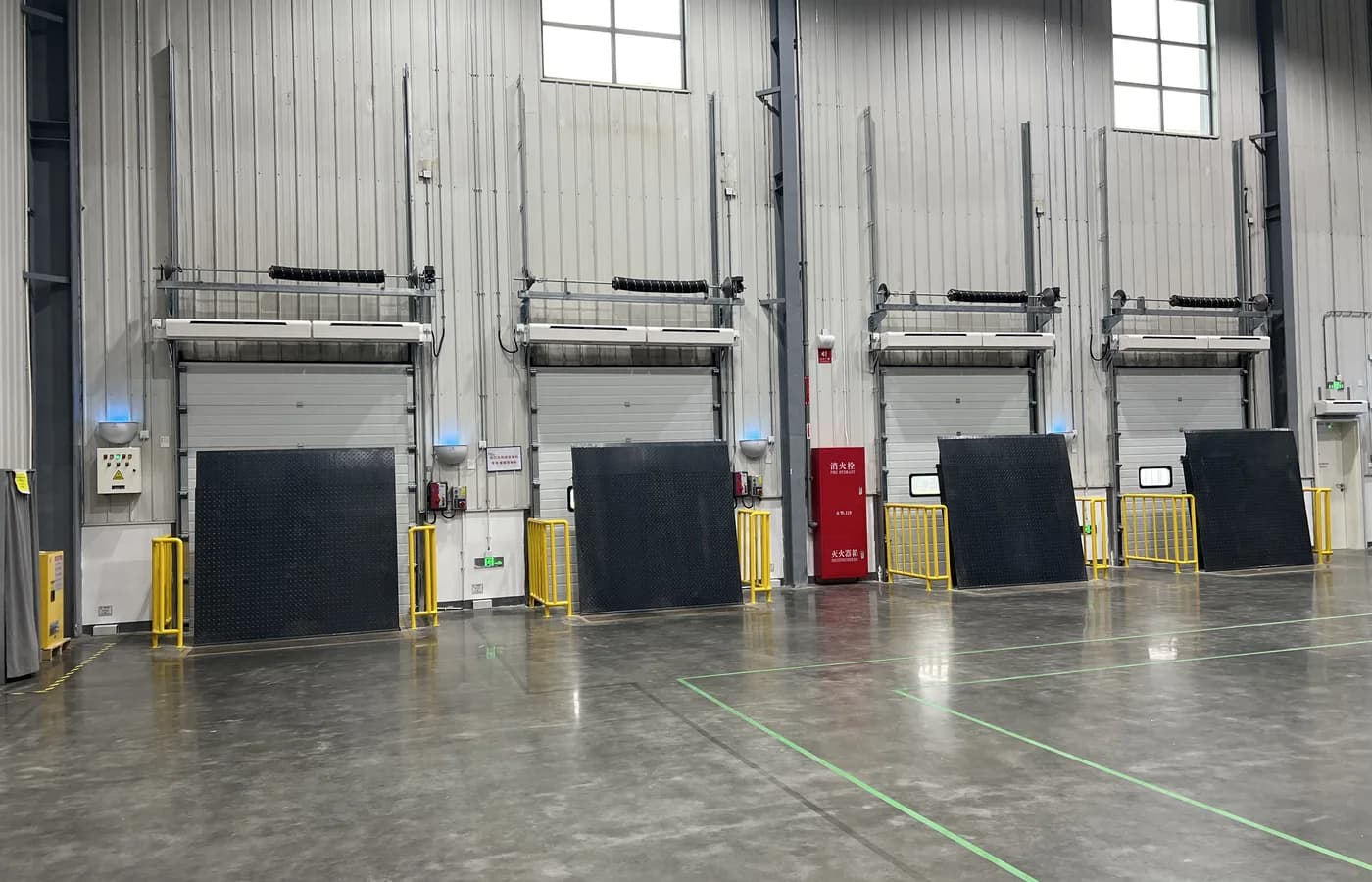
Start with the vehicles and the building, not the catalogue size
The leveler has to connect two fixed and moving conditions: the warehouse floor and a changing vehicle bed. Record the lowest and highest vehicle bed heights, vehicle body width, tail-lift or rear-door geometry, typical stopping position and the distance from the dock face to the usable trailer floor.
At the building, verify the finished dock height, pit length, width and depth, embedded steel, concrete condition, drainage and cable route. For an existing facility, photographs and measured drawings help expose conflicts before fabrication.
- Vehicle types and bed-height range
- Pit dimensions and structural condition
- Dock height and bumper projection
- Required lip overlap and usable trailer floor
- Power supply and control-panel location
- Door, shelter and traffic-control interfaces
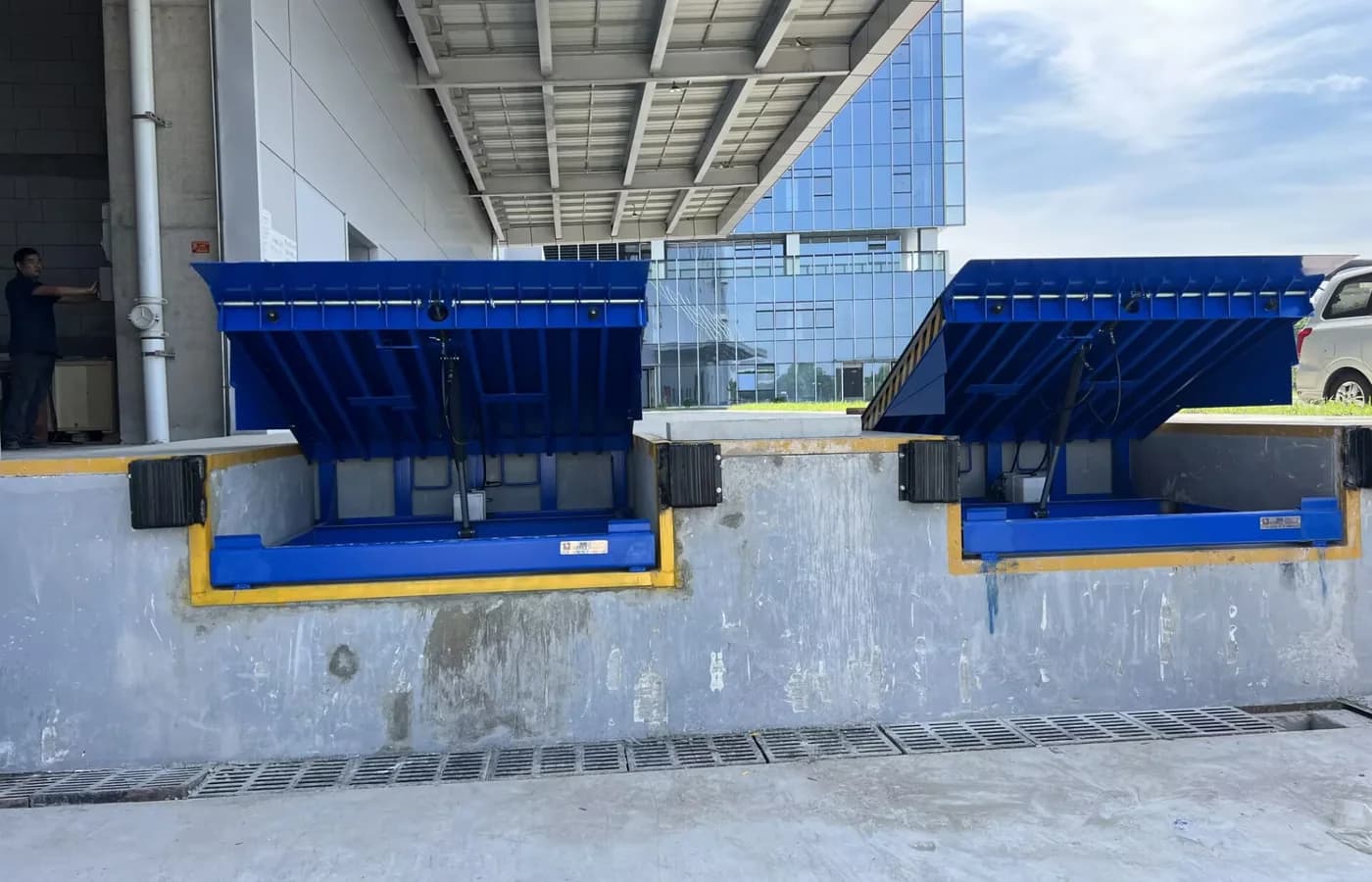
Choose the lip type by reach and loading method
Lip design changes how the platform reaches the vehicle. Compare the usable overlap, approach clearance, loading pattern and driver positioning instead of selecting by name alone.
| Configuration | Often considered when | Confirm before selection |
|---|---|---|
| Swing lip | Standard bays and repeatable vehicle positions | Lip length, overlap and rear-door clearance |
| Telescopic lip | More controlled reach or varied vehicle positions | Extension range, support and operating sequence |
| Edge-mounted | Retrofit conditions without a conventional pit | Limited height range, structure and vehicle compatibility |
Calculate duty from the moving load, not only the goods weight
A forklift creates concentrated wheel loads and repeated dynamic impact as it crosses the hinge, deck and lip. Provide the loaded forklift weight, maximum pallet or goods weight, attachments, axle or wheel data where available, crossing frequency and whether several vehicles may use the bay.
Capacity should be confirmed for the selected construction and duty cycle. Frequent heavy traffic may require additional deck reinforcement, a different hydraulic arrangement or a more conservative operating plan.
A useful answer
The proposal records the loaded vehicle, goods, traffic frequency and applicable rated-capacity basis.
Follow up when
The capacity is selected only from the pallet weight, without the forklift and dynamic crossing conditions.
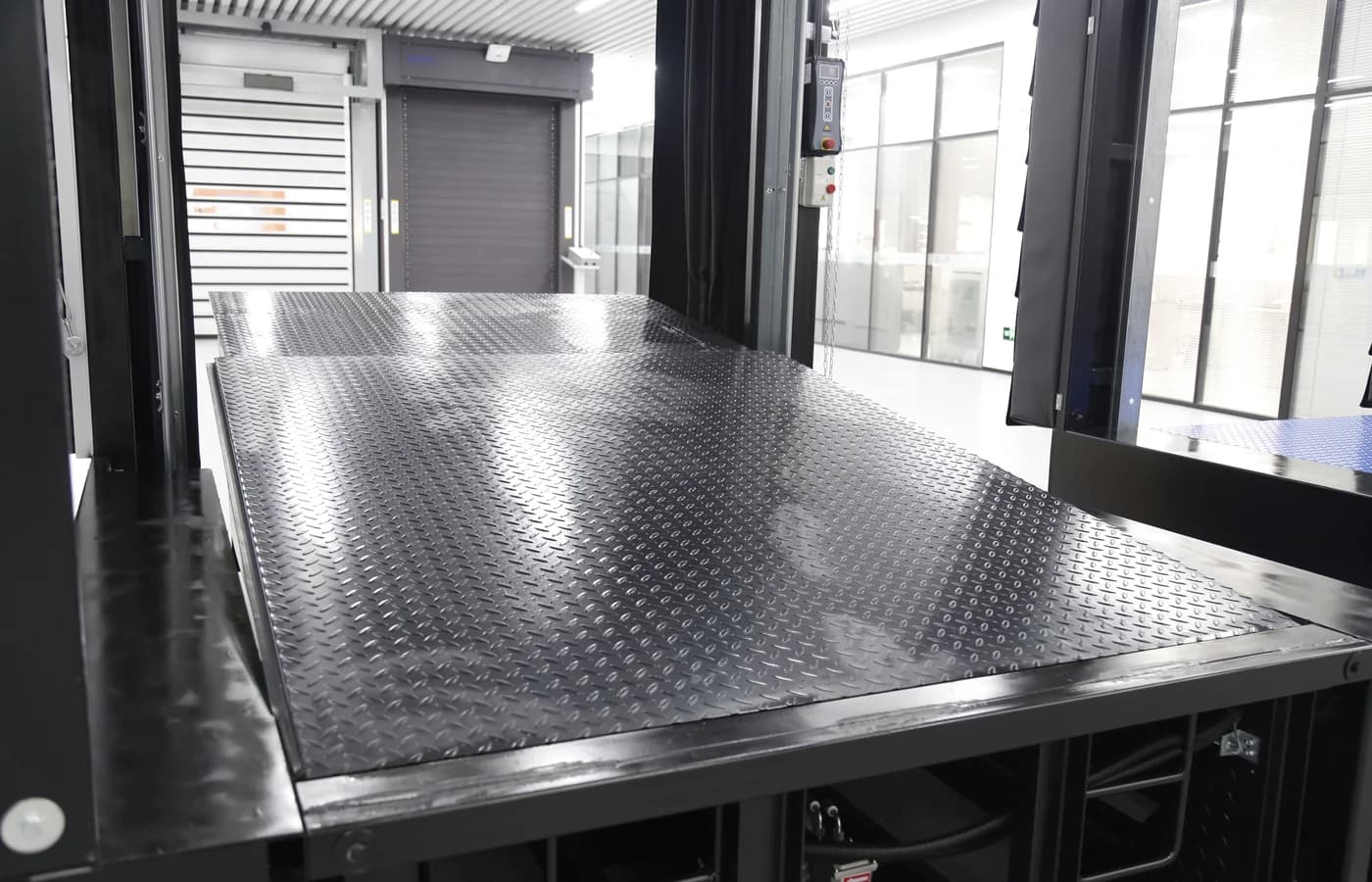
Check the operating range and trailer contact condition
The deck angle must remain practical across the expected vehicle range. A leveler that technically reaches a low or high trailer may still create an unsuitable slope, poor lip contact or insufficient overlap for the forklift route.
Ask the supplier to review the highest, lowest and most common trailer conditions. Unusual vehicles, refrigerated bodies, containers, tail lifts or uneven yards should be identified before the layout is approved.
Plan safety as a loading-bay sequence
The leveler is only one moving element in the bay. Define when the vehicle may approach, when the door can open, how the leveler is deployed, how people and forklifts are kept out of hazardous zones and how the equipment returns to its stored position.
A site-specific review may include bumpers, wheel restraint or chocks, traffic lights, warning devices, side protection, maintenance supports and control interlocks. Local regulations and the facility risk assessment govern the final safety design.
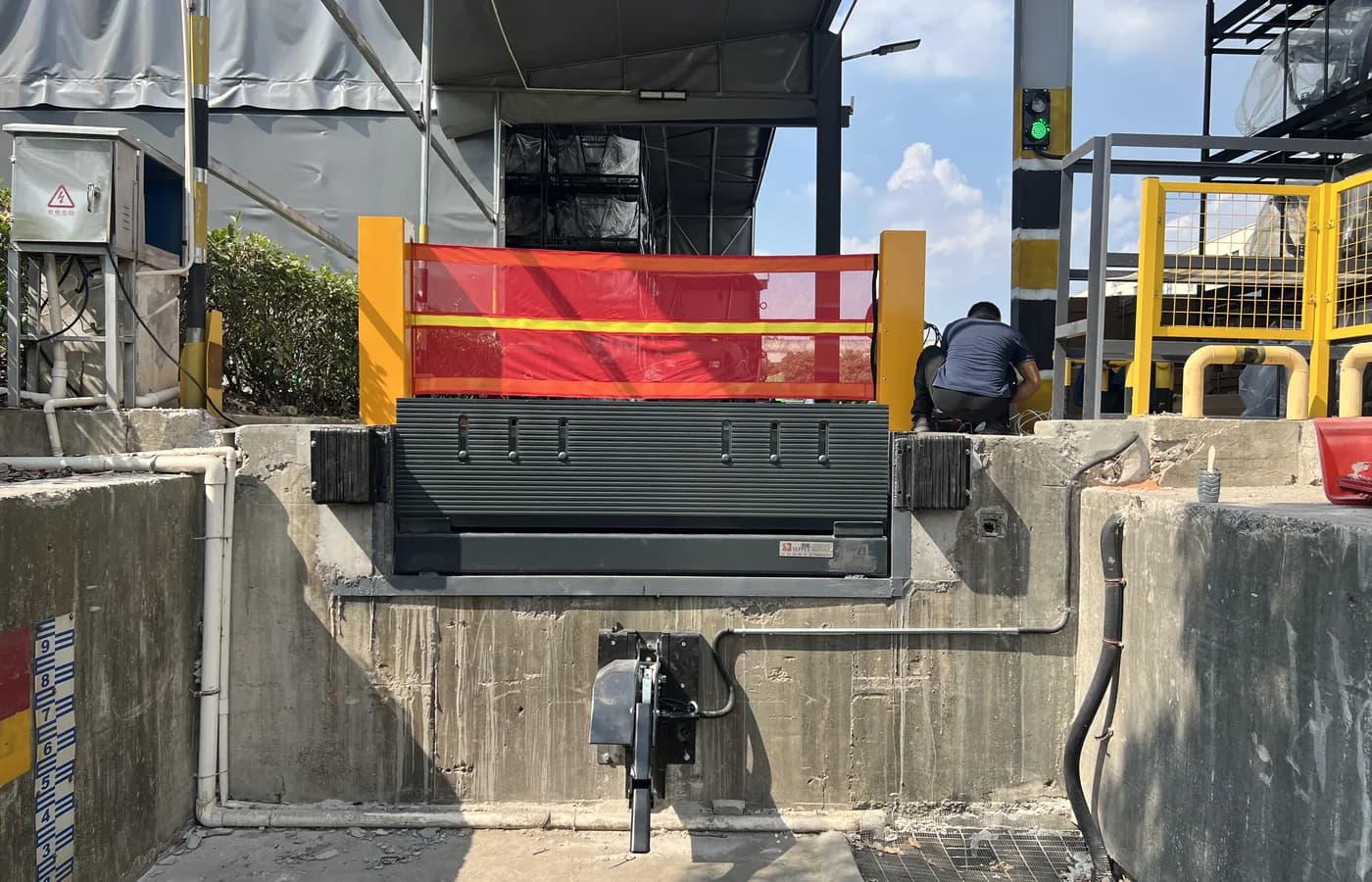
Send a complete data package before requesting a configuration
A clear enquiry reduces assumptions and makes proposals easier to compare. SEPPES can review a new-build or retrofit loading bay when the opening, pit, vehicle fleet and workflow information are supplied together.
- Pit and dock drawings with verified dimensions
- Vehicle list with minimum and maximum bed heights
- Loaded forklift and goods data with daily crossing frequency
- Required lip reach and any tail-lift or door conflicts
- Door, shelter, restraint, signal and interlock requirements
- Power supply, project location and applicable standards
Hydraulic Dock Leveler Selection Questions
What size hydraulic dock leveler do I need?
The platform must fit the verified pit and cover the required vehicle bed-height range. Measure pit length, width and depth, dock height, structural details and available rear and side clearances before selecting a standard or customized size.
What is the difference between a swing lip and a telescopic lip?
A swing lip rotates outward as the deck rises and is a practical choice for many standard loading bays. A telescopic lip extends forward and offers more controlled reach where vehicle positions, load access or the required overlap vary. Confirm the vehicle and pit conditions before choosing.
Can a dock leveler be installed without an existing pit?
Some renovation projects can use an edge-mounted or purpose-designed arrangement, but the available height range, approach, building structure and vehicle fleet must be reviewed. Do not assume that a pit-mounted leveler can be installed at the dock edge without redesign.
How should rated capacity be selected?
Assess the loaded forklift, operator, goods, attachments, wheel loads, crossing speed and operating frequency. The project engineer should select the rated capacity and deck reinforcement with an appropriate margin for the actual duty cycle.
Should the leveler be coordinated with the door and dock shelter?
Yes. Door position, shelter projection, vehicle restraint or wheel control, traffic lights, interlocks and the safe return sequence should be reviewed as one loading-bay system.
FROM REQUIREMENTS TO CONFIGURATION
Bring your project into focus.
Share the opening dimensions, quantity, application, traffic, environment, controls, location and available drawings.
Discuss your requirementsRelated solution