
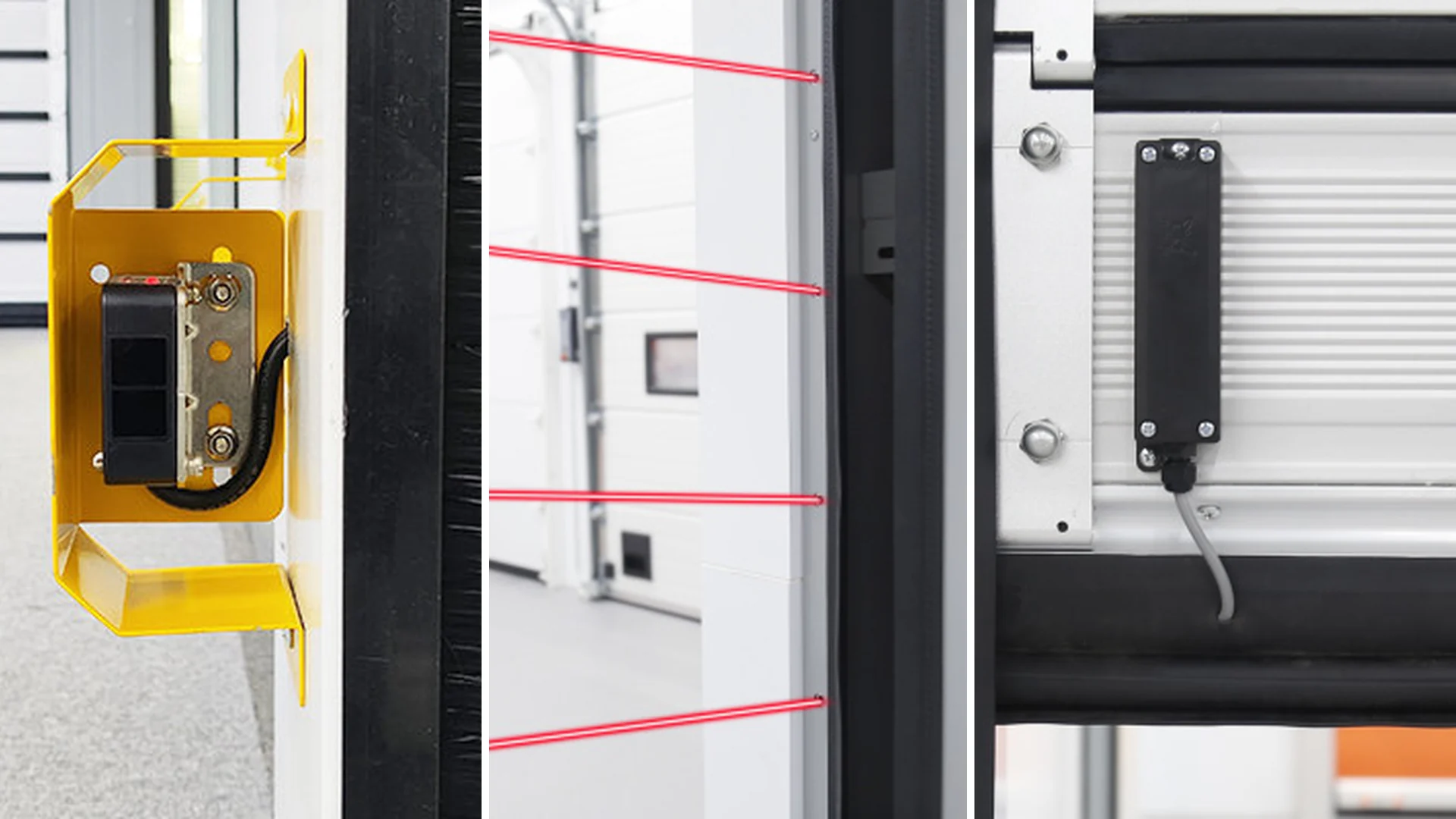
A photocell, safety light curtain and safety edge do different jobs. A photocell monitors one defined beam, a light curtain monitors multiple beams across a taller detection field, and a safety edge reacts when the closing edge makes contact. The right high-speed door configuration depends on traffic, approach direction, blind spots, closing movement and the site risk assessment.
Quick answer
Which safety sensor is best for a high-speed door?
There is no universal best sensor. Use a photocell for a defined obstruction beam, consider a safety light curtain where wider vertical presence detection is required, and use a safety edge as contact protection on the closing edge where the selected door design supports it. Busy forklift, pedestrian or automated routes may need several protective and traffic-control measures working together.- Photocell
- Single defined beam
- Light curtain
- Multi-beam detection field
- Safety edge
- Contact response
- Final choice
- Site risk assessment
Start with the hazardous movement and traffic route
Sensor selection should begin with the way the door moves and the people, forklifts, carts or automated vehicles that use the opening. Record where each user approaches, whether traffic can stop inside the doorway, how quickly the door closes and whether nearby equipment creates a blind approach.
Activation and protection are separate functions. A radar, loop, pull cord or machine signal may request opening, while a protective device monitors the closing path or doorway. One device should not be assumed to perform both functions unless its documented rating and control logic support that use.
- Identify pedestrians, forklifts, carts, AGVs and mixed traffic.
- Map direct, angled and cross-traffic approach paths.
- Check whether a load or vehicle can remain in the opening.
- Define the door's stop, reverse and fault response.
- Confirm local requirements and complete a site-specific risk assessment.
Photocell: focused protection across one defined line
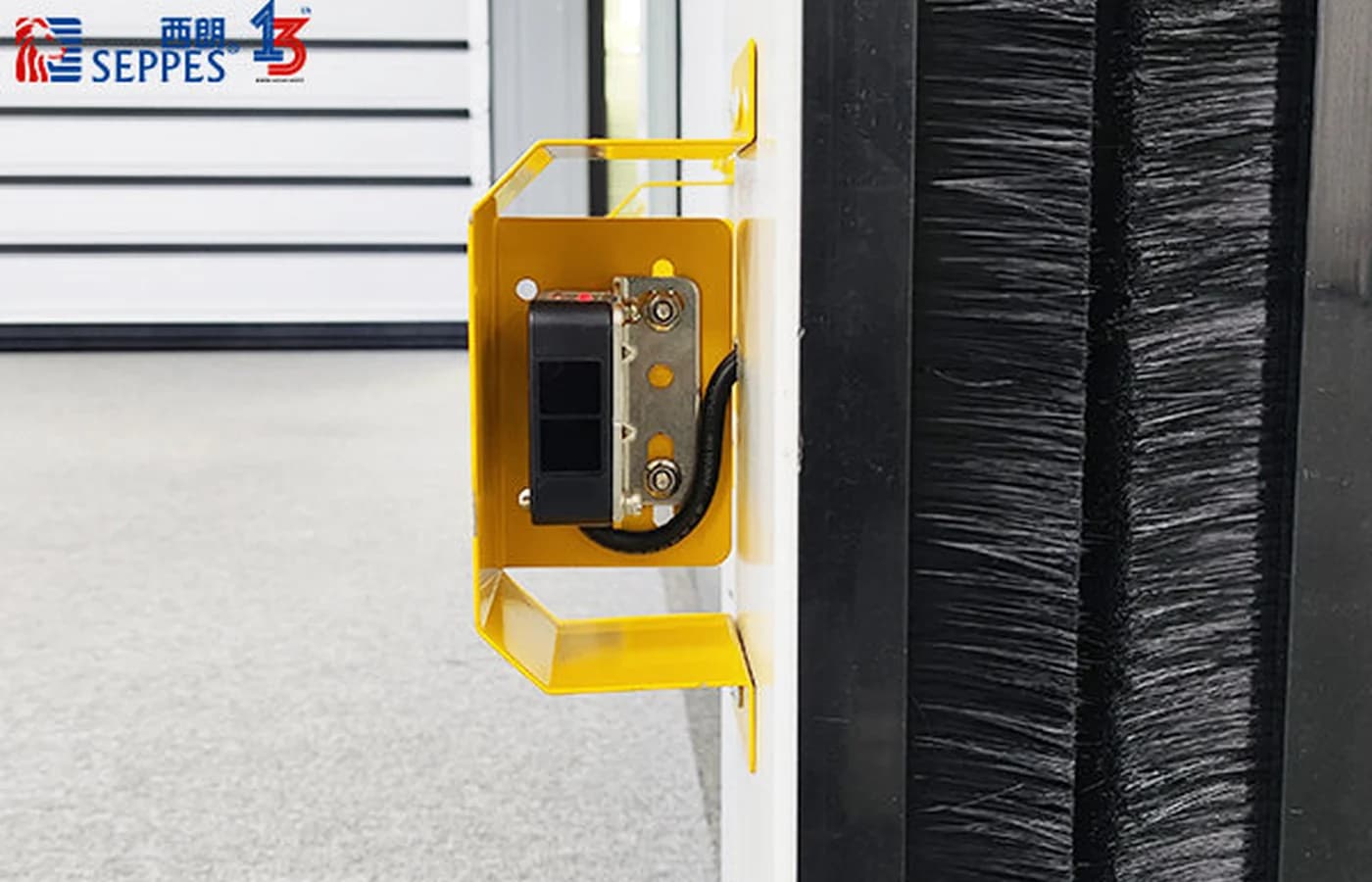
An infrared photocell sends a beam across the doorway. When a person, vehicle or object interrupts that beam, the controller receives an obstruction signal and follows the configured stop or reverse logic.
A photocell is a practical protection layer for many industrial doors, but its position matters. A single low beam may detect wheels or legs while missing another part of a load. Multiple beams or another device may be required where the traffic profile creates gaps in coverage.
A useful answer
The proposal identifies photocell quantity, mounting height, coverage and the door response when a beam is interrupted or fails.
Follow up when
The proposal lists a photocell without showing where it is installed or what part of the traffic route it monitors.
Safety light curtain: multiple beams across a detection field
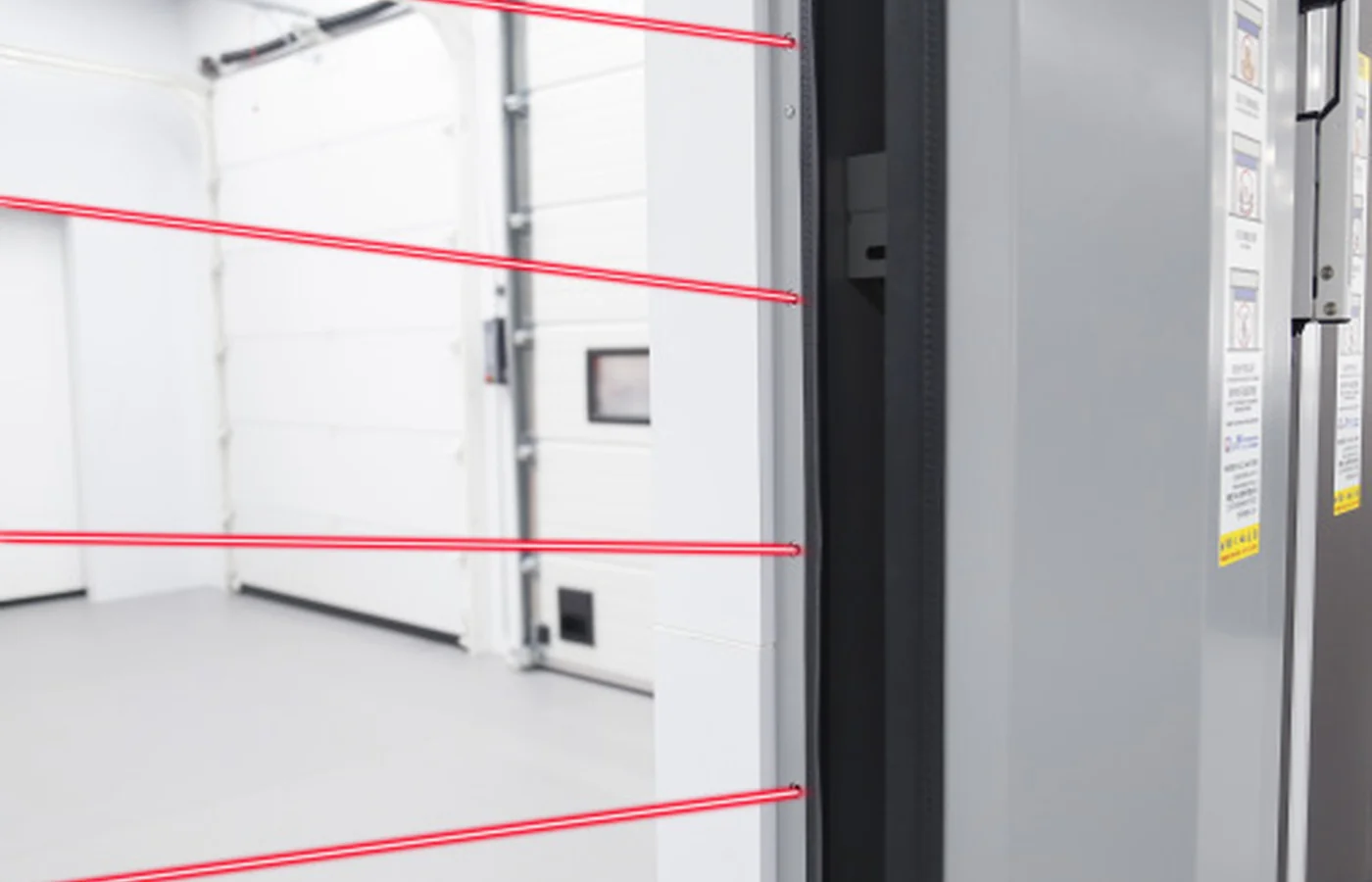
A safety light curtain uses an array of beams between the transmitter and receiver. The monitored field can cover more of the opening height than a single photocell, which may suit wide or busy passages and traffic with varied shapes.
Coverage still has boundaries. The protected height, resolution, mounting position, response time, control interface and environmental conditions must match the project. Dirt, misalignment, physical damage or an unsuitable installation can affect performance and should be addressed in inspection and maintenance plans.
| Decision point | Photocell | Safety light curtain |
|---|---|---|
| Detection pattern | One defined beam per device | Multiple beams across a field |
| Coverage | Focused at the installed height | Broader vertical monitoring within rated area |
| Typical benefit | Simple obstruction monitoring | More complete presence detection across the opening |
| Planning focus | Beam height, quantity and blind zones | Protected height, resolution, alignment and interfaces |
| Maintenance | Clean lens and verify alignment | Clean field, verify alignment and test all zones |
Safety edge: contact protection on the moving bottom edge
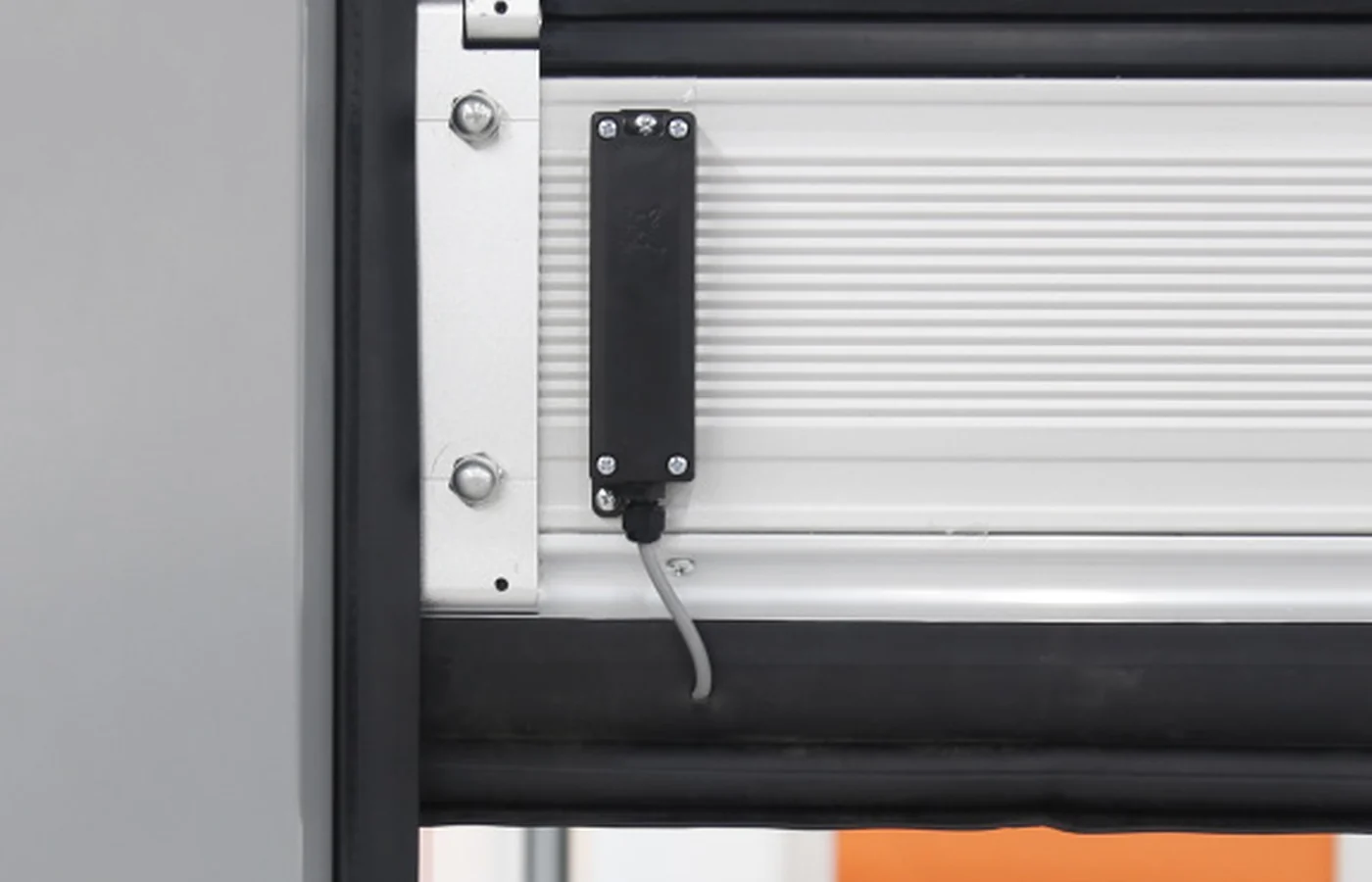
A safety edge is installed on the closing edge of a compatible door. When the edge contacts an obstruction, it sends a signal for the controller to stop or reverse according to the validated circuit and settings.
Because this is a contact function, it should not be described as advance presence detection. Check the activation force, response path, cable or wireless signal, edge condition and test procedure for the selected system.
Select combinations around the actual application
The following examples are planning directions rather than universal prescriptions. Final device selection and safety logic require project engineering, applicable standards and a site risk assessment.
| Traffic scenario | Protection direction to review | Additional controls to consider |
|---|---|---|
| Occasional personnel route | Photocell or suitable presence detection | Vision, warning and controlled closing delay |
| Frequent forklift route | Multi-height detection or light curtain plus compatible edge | Radar or loop activation, traffic lights and route separation |
| Mixed people and vehicles | Broader monitored field and closing-edge protection | Separate lanes, barriers, warnings and access rules |
| AGV or conveyor interface | Protective devices independent of the opening request | Request, ready, open, clear and fault signals |
| Large or irregular loads | Coverage that detects the load profile and stopping position | Longer clearance logic and supervised movement |
Define fault behaviour, commissioning and routine tests
A device list is incomplete without the response logic. Define what happens when a beam is interrupted, the light curtain loses alignment, the safety edge activates or a cable or communication signal fails. The safe response should be verified during commissioning.
Routine inspection should check lenses, alignment, brackets, cables, edge condition and the actual stop or reverse response. Record the result and correct faults before returning the door to normal service. Maintenance frequency depends on traffic, environment, device instructions and the facility safety plan.
- Confirm each device, coverage area and safety function on the drawing.
- Test obstruction response from relevant positions in the opening.
- Verify fault and power-loss behaviour.
- Check interaction with activation sensors and automatic closing delay.
- Document commissioning results and routine inspection responsibilities.
Send the traffic and control details with your enquiry
SEPPES can configure high-speed door activation and protective devices around the selected door and traffic route. Send the opening dimensions, door type, users, vehicle size and speed, approach direction, daily frequency, environmental conditions, control interfaces, project location and available drawings or videos.
The final safety concept remains part of the complete installed system and site risk assessment. Door sensors do not replace traffic management, machine guarding, fire protection or other facility safety measures.
High-Speed Door Safety Sensor Questions
Is a photocell enough for every high-speed door?
No. A photocell protects only its defined beam and position. The required coverage depends on the opening, door movement, traffic, approach direction, closing speed and site risk assessment.
What is the difference between a photocell and a safety light curtain?
A photocell normally creates one beam between a transmitter and receiver or reflector. A safety light curtain uses multiple beams to create a taller detection field, helping monitor more of the doorway height within its rated coverage.
Does a safety edge replace non-contact detection?
Not automatically. A safety edge responds after contact with the closing edge, while photocells and light curtains can detect an obstruction before contact within their coverage. The project may require both functions.
Is radar a safety sensor?
Radar is commonly used to request door opening or detect approach. Activation and protective functions must be distinguished in the control design; the selected device, safety rating and validated function determine its role.
What information is needed to select the safety system?
Provide the clear opening, door type, traffic users, vehicle dimensions and speed, approach paths, operating frequency, nearby equipment, control sequence, local requirements and the project risk assessment.
FROM REQUIREMENTS TO CONFIGURATION
Bring your project into focus.
Share the opening dimensions, quantity, application, traffic, environment, controls, location and available drawings.
Discuss your requirementsRelated solution