
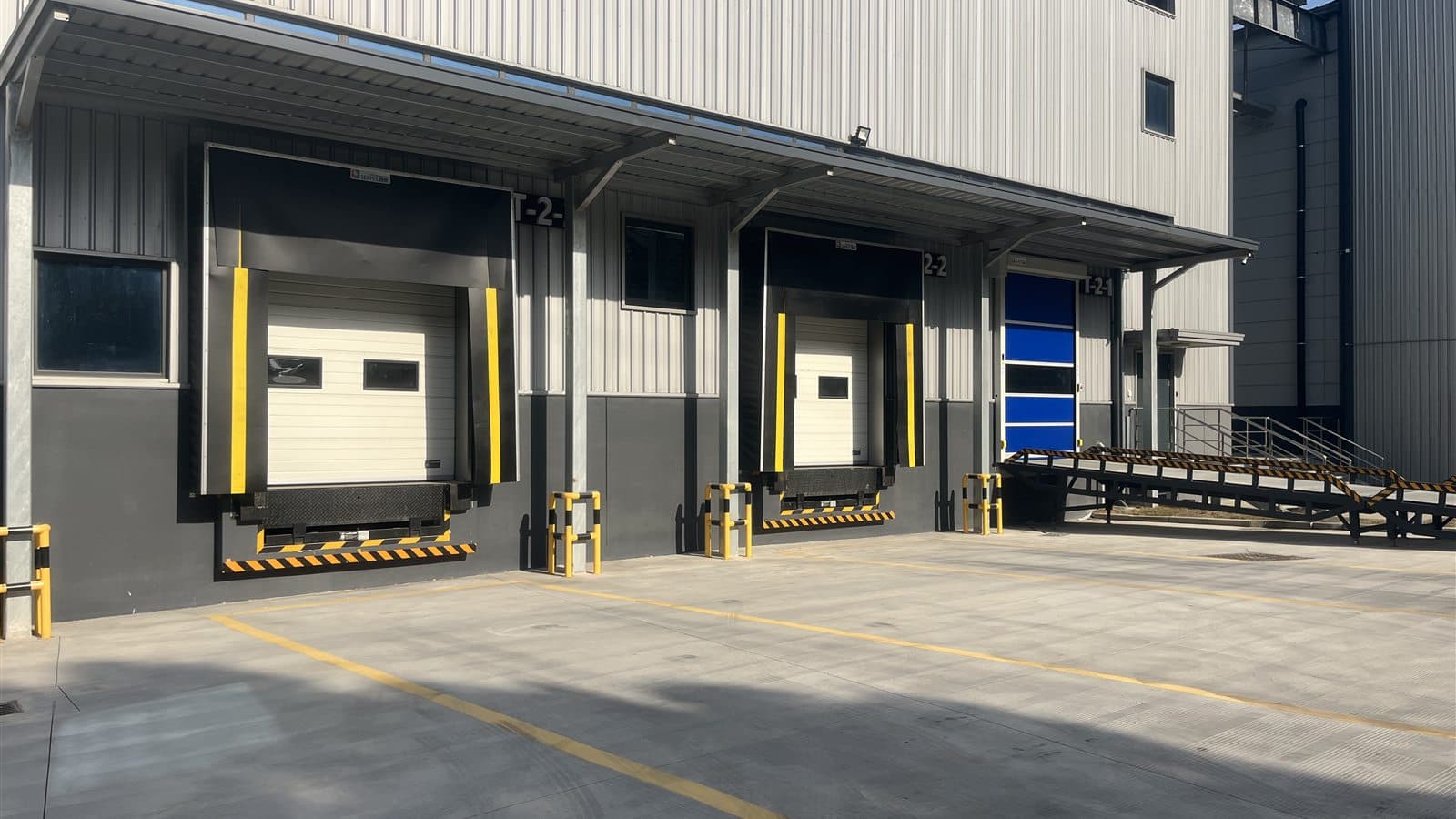
Choose a dock shelter by matching its clear opening and contact surfaces to the vehicles that will actually use the bay. Confirm vehicle width and height, dock opening, bumper projection, shelter projection, rear-door arrangement, yard approach and loading sequence. A shelter selected only from the wall opening may contact the wrong part of the vehicle or leave avoidable gaps.
Quick answer
What information is needed to choose a dock shelter?
Provide the minimum and maximum vehicle body width and height, rear-door and tail-lift details, dock opening and platform dimensions, dock height, bumper projection, vehicle stopping position, yard approach, required environmental protection and expected traffic. These inputs determine the shelter type, clear opening, projection and contact arrangement.- Start with
- Vehicle fleet
- Match
- Contact geometry
- Coordinate
- Door + leveler
- Protect with
- A complete sequence
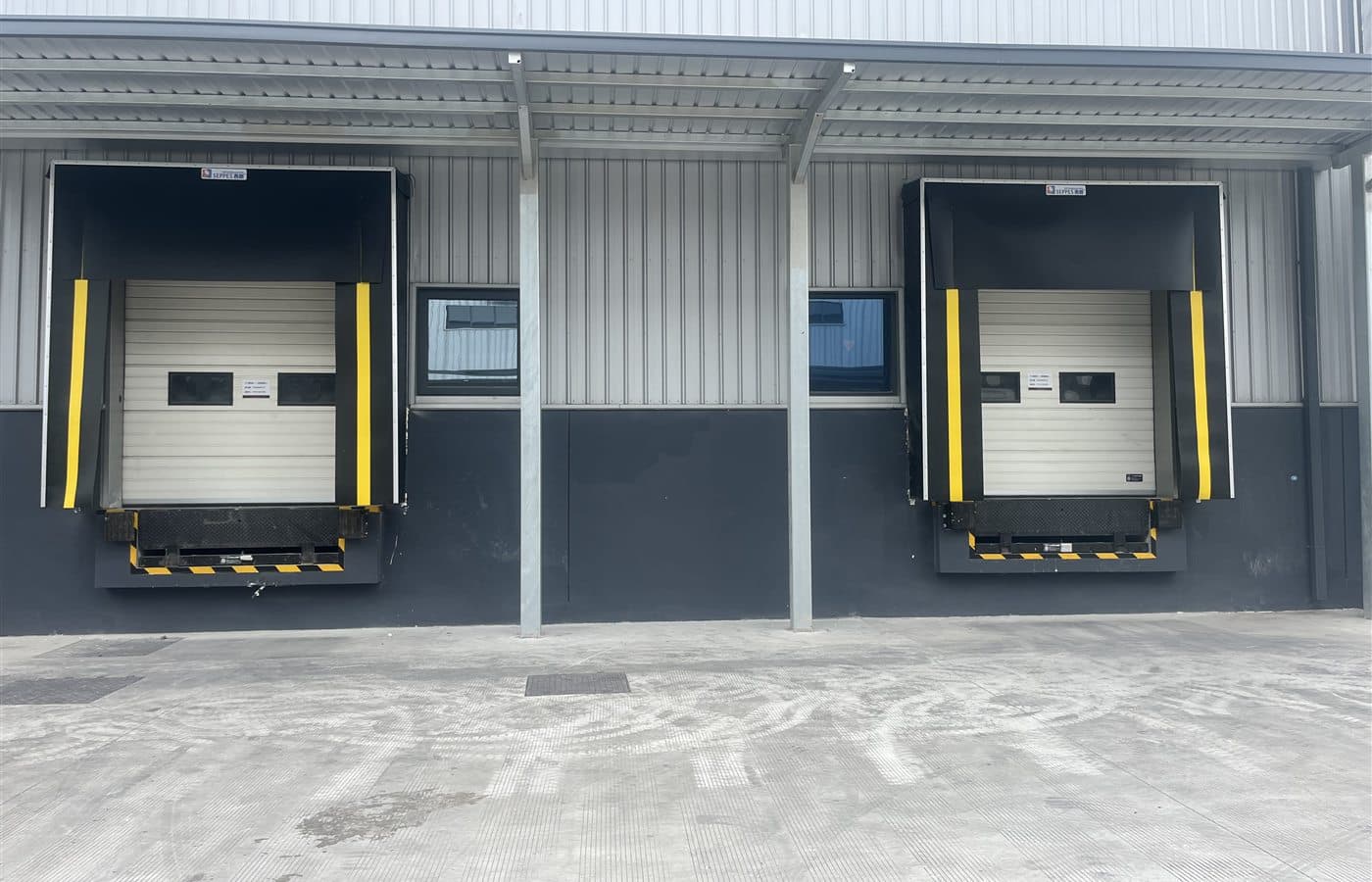
Start with the vehicle fleet and stopping position
The vehicle is the moving half of the interface. Record the smallest and largest bodies expected at the bay, including body width and height, roof profile, rear-door hinges, handles, steps, tail lifts and refrigeration equipment. The usable range should reflect regular vehicles rather than one reference truck.
Then review how vehicles approach and stop. Yard slope, turning angle, wheel guides, bumpers and driver visibility affect where the vehicle meets the shelter. A suitable shelter must tolerate the agreed approach while maintaining a clear route into the trailer.
- Minimum and maximum vehicle body width and height
- Rear-door, hinge, step and tail-lift arrangement
- Dock height, wall opening and bumper projection
- Normal stopping position and expected offset
- Yard slope, turning path and wheel-guide arrangement
- Frequency of use and environmental objective
Compare shelter types by contact method
Different shelter constructions meet the vehicle in different ways. Compare how the front curtains or cushions contact the vehicle, how much variation they accommodate and what operating sequence they require.
| Approach | Often considered when | Confirm before selection |
|---|---|---|
| Curtain dock shelter | Vehicle sizes vary and a flexible perimeter is required | Clear opening, curtain overlap, projection and vehicle contact |
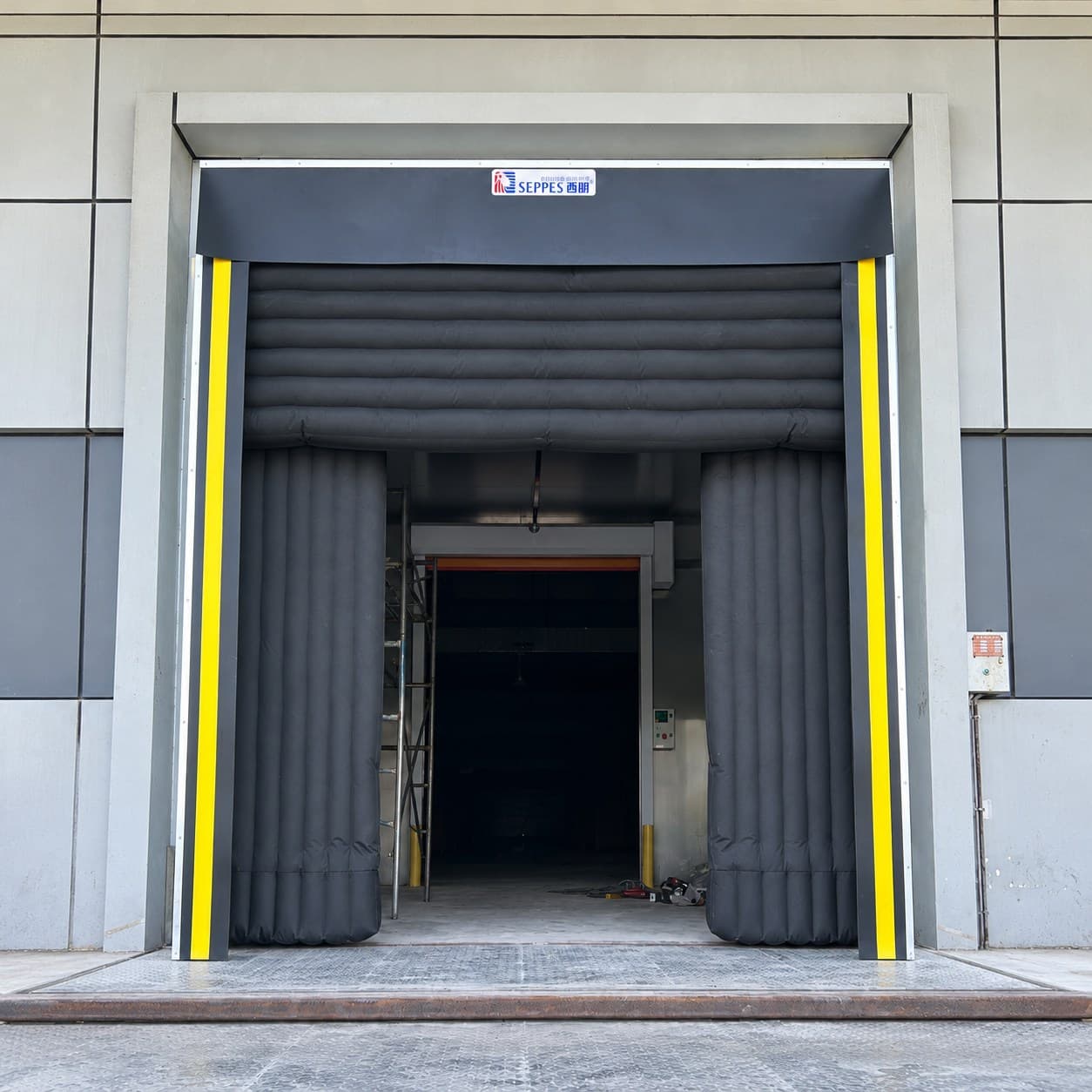
| Inflatable dock shelter | Controlled contact is required after the vehicle is positioned | Inflated range, sequence, controls and departure interlock |
| Compression dock seal | Vehicle range is consistent and pad contact is acceptable | Compression, opening clearance and vehicle hardware conflicts |
Check the clear opening, overlap and projection together
A wall opening measurement is not enough. The shelter creates its own clear width and height, while its projection determines when and where the vehicle makes contact. The industrial door and trailer opening must remain usable after the side and top elements are engaged.
Ask for a drawing that shows the wall opening, shelter frame, clear passage, bumpers, dock face, expected vehicle body and contact zone in the same view. Review the smallest and largest regular vehicles against that drawing before approval.
A useful answer
The proposal defines an operating vehicle range and shows the resulting clear opening and contact position.
Follow up when
The shelter is selected only from the building opening, with no vehicle envelope or bumper relationship.
Coordinate the shelter with the door, leveler and bumpers
The dock shelter does not operate alone. Bumpers establish the vehicle stand-off distance; the shelter projects toward the vehicle; the door provides the building closure; and the dock leveler bridges the height and distance to the trailer floor. A change to one element can affect the others.
Confirm that the vehicle can open its rear doors as required, the industrial door can move safely, the leveler lip reaches the supported trailer floor and the shelter is not overloaded by excessive reversing force. Drawings should also show drainage, canopy and wall-fixing conditions where relevant.
Treat protection and safety as separate responsibilities
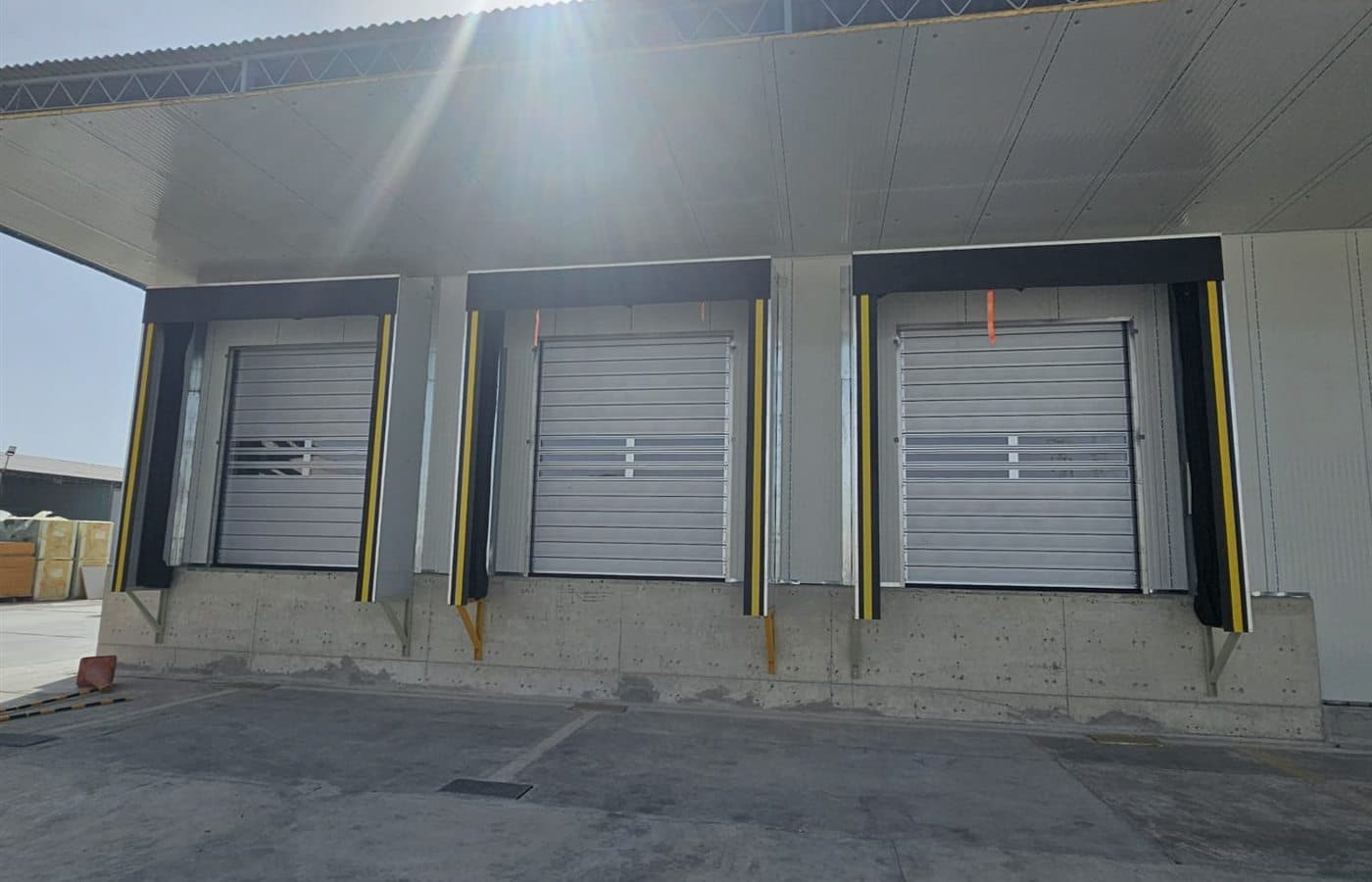
A dock shelter helps manage the exposed gap around a correctly positioned vehicle. It does not restrain the vehicle, confirm that the trailer is safe to enter or remove the fall and crush hazards around an open dock. Those risks require the facility's traffic rules, communication, restraint or chocking method, edge protection and operating procedures.
The shelter also needs inspection. Check curtains, cushions, stitching, frame, mounting points and visible impact damage. Repeated off-centre contact is a reason to correct vehicle guidance or operating practice rather than repeatedly replacing damaged material.
Send one complete loading-bay data package
A complete enquiry lets the supplier review the shelter as part of the loading position instead of making assumptions from one opening dimension. SEPPES can configure dock equipment around verified site and vehicle information, subject to the final project review.
- Dock opening, wall and platform dimensions
- Minimum and maximum regular vehicle body dimensions
- Rear-door, tail-lift and refrigeration-unit details
- Dock height, bumper size and required vehicle stand-off
- Door, leveler, shelter and control sequence
- Project location, traffic frequency and site photographs or drawings
Dock Shelter Selection Questions
What is the difference between a dock shelter and a dock seal?
A dock shelter normally uses flexible curtains or cushions around the vehicle opening while leaving a clear passage. A dock seal uses compressible pads that contact more of the vehicle rear. The appropriate approach depends on vehicle variation, contact position, opening size and the required environmental boundary.
When should an inflatable dock shelter be considered?
An inflatable shelter may be considered when controlled contact around different vehicle sizes is important. It inflates after the vehicle is positioned and should deflate before departure. Confirm the vehicle range, inflation sequence, available space and controls for the specific project.
Can one dock shelter fit every truck?
Usually not without limits. A shelter has a defined operating envelope. Very small, large or unusually shaped vehicles, tail lifts, rear steps and door hardware can change the required clear opening and contact position.
Does a dock shelter make a loading bay weatherproof?
A correctly matched shelter can reduce direct exposure and gaps around a positioned vehicle, but performance depends on vehicle fit, wall condition, dock geometry and contact. It should not be described as completely weatherproof without applicable test evidence.
Should the shelter be planned with the door and dock leveler?
Yes. The industrial door, shelter, bumpers, dock leveler, vehicle position, signals and operating procedure should be reviewed as one loading-bay system.
FROM REQUIREMENTS TO CONFIGURATION
Bring your project into focus.
Share the opening dimensions, quantity, application, traffic, environment, controls, location and available drawings.
Discuss your requirementsRelated solution