
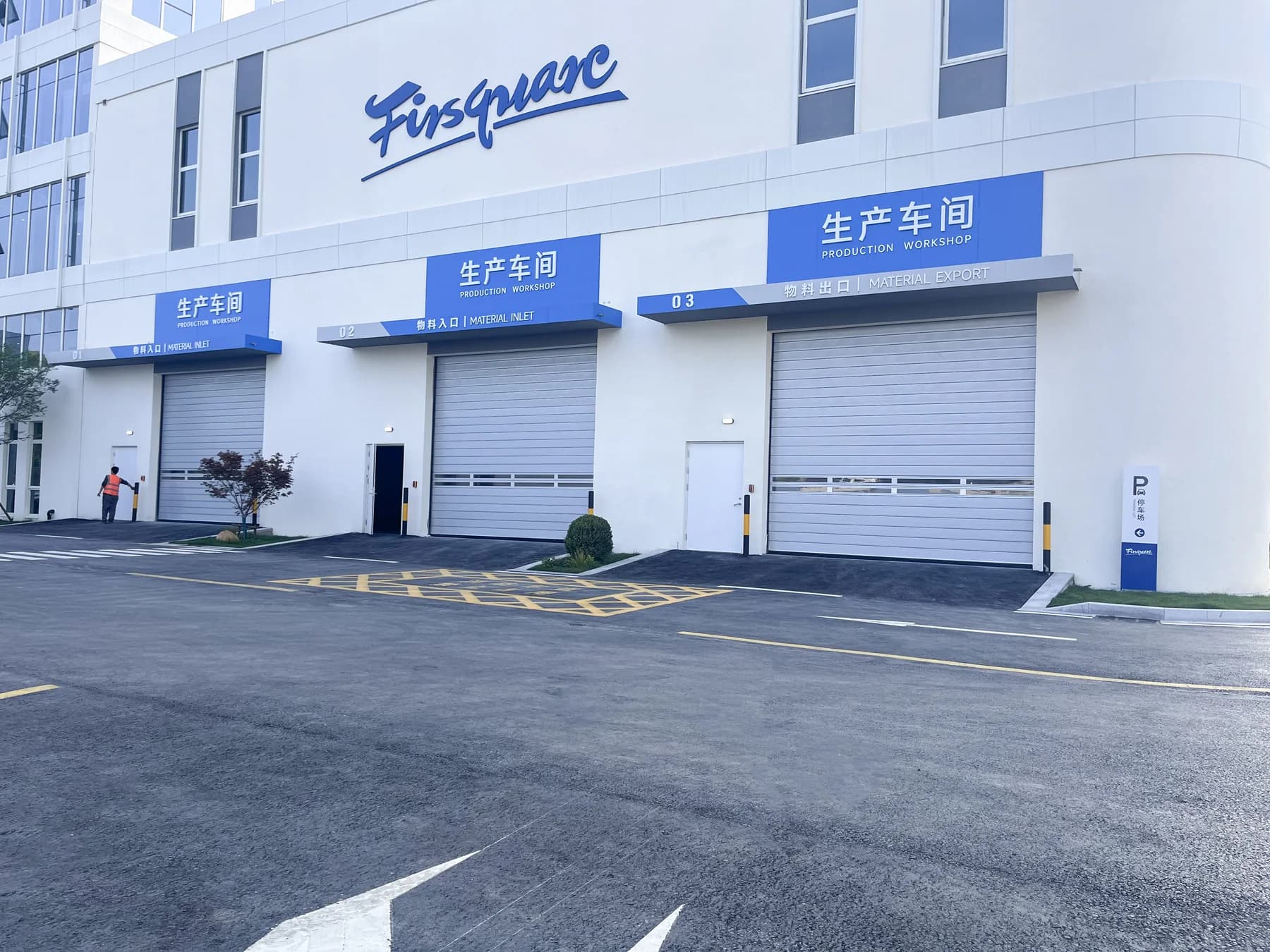
A high-speed spiral door can suit a frequently used cold-chain exterior entrance when the project needs faster vehicle access, a rigid insulated closure and better control of unnecessary air exchange. Selection must consider temperature and humidity on both sides, traffic frequency, opening size, wind exposure, condensation and frost strategy, safety sensing and available installation space. The door supports the temperature boundary, but it does not replace refrigeration, HVAC, drainage or site operating procedures.
Quick answer
When should a cold-chain facility consider a high-speed spiral door?
Consider a high-speed spiral door for a frequently used exterior or security-sensitive cold-chain opening that needs a rigid insulated curtain and rapid operation. Confirm the model against the actual temperature difference, humidity, wind, opening dimensions, cycle demand, vehicles, structural support and moisture-control strategy before specification.- Best fit
- Frequent exterior access
- Door type
- Rigid insulated rapid door
- Key inputs
- Traffic + climate + opening
- System boundary
- Door supports refrigeration
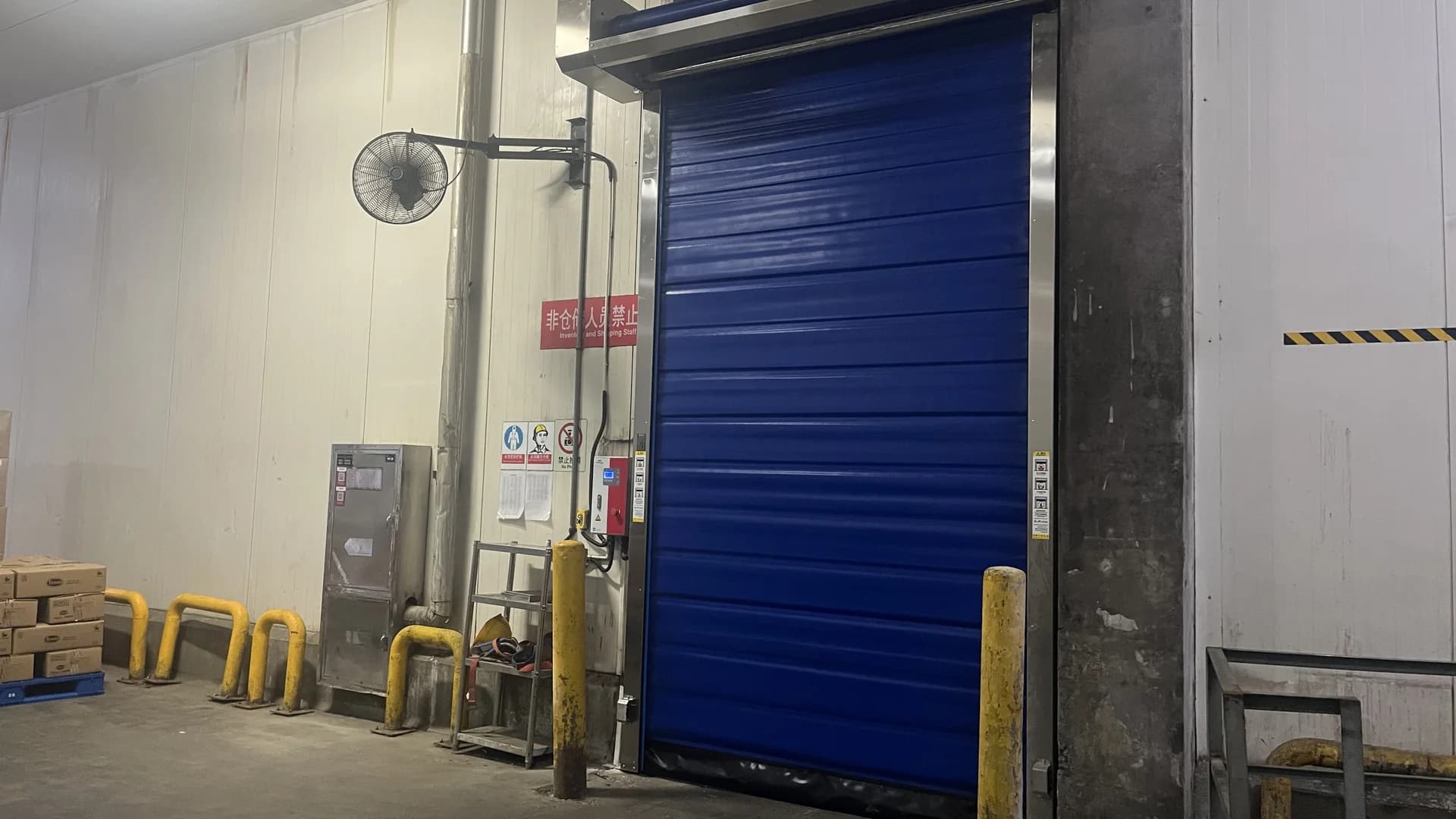
Why frequent exterior openings challenge cold-chain operations
Every opening connects two different environments. During a busy shift, slow movement or a door held open for traffic can allow warm, moisture-laden air to enter the controlled zone and conditioned air to escape. The result may include temperature fluctuation, condensation, frost risk, reduced visibility near the opening and longer vehicle queues.
The problem is not solved by choosing the fastest quoted door. A useful entrance must open early enough for smooth travel, close after the route is clear and remain appropriate for the building envelope when shut. The traffic, climate and control sequence need to be assessed together.
- Forklifts queue while a slow exterior door completes its cycle
- Wide activation zones trigger avoidable openings from nearby movement
- Warm humid air reaches cold surfaces around the entrance
- Wind pressure affects movement, sealing and structural requirements
- Pedestrian and vehicle routes compete at one doorway
What a rigid high-speed spiral door contributes
A high-speed spiral door combines a rigid aluminium-slat curtain with rapid powered movement and project-selected safety and activation devices. For a suitable exterior entrance, the rigid curtain supports security and building closure, while faster cycling can shorten unnecessary open time between vehicle movements.
SEPPES spiral-door product evidence describes aluminium-alloy slats, acrylic vision windows and a sealing-oriented rigid curtain. Final insulation, speed, wind resistance, dimensions, finish and safety configuration remain model- and project-specific and should be stated in the approved technical proposal.
| Project requirement | Door contribution | What still needs coordination |
|---|---|---|
| Frequent vehicle flow | Rapid powered opening and closing | Detection zones, timing and route management |
| Thermal boundary | Rigid insulated curtain and perimeter interfaces | Refrigeration, HVAC and building envelope |
| Exterior exposure | Project-selected tracks, structure and safety package | Wind basis, supporting steel and weather details |
| Operational visibility | Vision sections can support awareness | Lighting, warnings and pedestrian separation |
| Secure closure | Rigid slats form a robust closed barrier | Access permissions and emergency procedures |
Control condensation and frost as a complete system
A fast cycle can reduce the duration of an open doorway, but moisture behavior depends on more than the door. Record temperature and relative humidity on both sides, pressure direction, nearby evaporators or air outlets, drainage, floor condition and the expected time the opening remains exposed during peak traffic.
The facility designer may need to coordinate air management, heating, dehumidification, drainage or a vestibule strategy. Cleaning and defrost procedures must also account for sensors, tracks, seals and floor interfaces. These measures belong in the project plan rather than being assumed from the door description.
A useful answer
The specification defines temperatures, humidity, traffic, moisture controls and the selected door model's documented operating conditions.
Follow up when
The door is expected to eliminate condensation or frost without reviewing airflow, humidity, drainage and operating behavior.
Match activation and safety to the traffic route
Forklift activation should be deliberate enough to avoid nuisance cycles but early enough to prevent hard braking. Radar can support hands-free approach detection, an induction loop can identify vehicles within a defined ground area, and access-control or automation signals can restrict opening to authorized movements. The appropriate method depends on the route and control objective.
Protective devices have different roles. Photocells monitor defined beam positions, light curtains cover a taller field and compatible safety edges respond at the closing edge. The final arrangement should follow the site risk assessment and the validated control design.
- Map forklift, pedestrian and cross-traffic approaches
- Define the activation zone and authorized opening request
- Confirm the doorway is clear before closing
- Set warning, delay and fault behavior for the real route
- Document emergency operation, inspection and testing
Verify opening, structure and exterior exposure
Measure the finished opening, headroom, side room, floor levels and installation faces. Identify nearby pipes, cable trays, sprinklers, evaporators and structural steel before approving the track arrangement. Exterior doors also need a documented wind basis and confirmation that the supporting structure is suitable for the selected system.
Site orientation matters. Record prevailing weather, drainage direction, façade details and whether vehicles stop close to the doorway. Photographs are useful, but dimensioned drawings and structural information should govern the final proposal.
Send a complete cold-chain entrance brief
SEPPES positions its rigid rapid-door range as a premium Chinese industrial-door option for professionally evaluated projects. The strongest proposal comes from application data, coordinated drawings and a clear operating sequence—not a generic model label.
- Finished opening width and height, headroom and side room
- Temperatures, humidity and pressure conditions on both sides
- Vehicle types, approach direction, cycles and peak traffic
- Wind exposure, façade construction and available supporting steel
- Condensation, frost, drainage and cleaning strategy
- Activation, access control, safety and emergency requirements
- Project location, quantity, drawings, photos and required documents
Cold-Chain High-Speed Spiral Door Questions
Will a high-speed spiral door prevent condensation?
No door can guarantee that result by itself. Faster operation can reduce unnecessary exposure, while condensation depends on temperature, humidity, pressure, airflow, surface temperatures, drainage and operating behavior.
Is a spiral door suitable for every freezer opening?
No. Very low-temperature and high-humidity applications require a project-specific review of the selected model, materials, seals, heating or frost controls, installation interfaces and maintenance plan.
What information is needed for selection?
Provide the opening width and height, headroom and side room, indoor and outdoor temperatures and humidity, daily and peak cycles, vehicle sizes, wind exposure, structural drawings, safety requirements, project location and site photographs.
How should the door be activated for forklifts?
Radar, induction loops, pull cords, access control or agreed automation signals may be considered. The detection zone, opening timing and closing delay should match approach direction, speed, pedestrians and nearby cross-traffic.
Can one door serve pedestrians and forklifts?
Shared use requires a site risk assessment. Separate pedestrian access is preferable where practical; otherwise visibility, detection, warnings, route control and operating rules must be defined for the actual opening.
FROM REQUIREMENTS TO CONFIGURATION
Bring your project into focus.
Share the opening dimensions, quantity, application, traffic, environment, controls, location and available drawings.
Discuss your requirementsRelated solution