
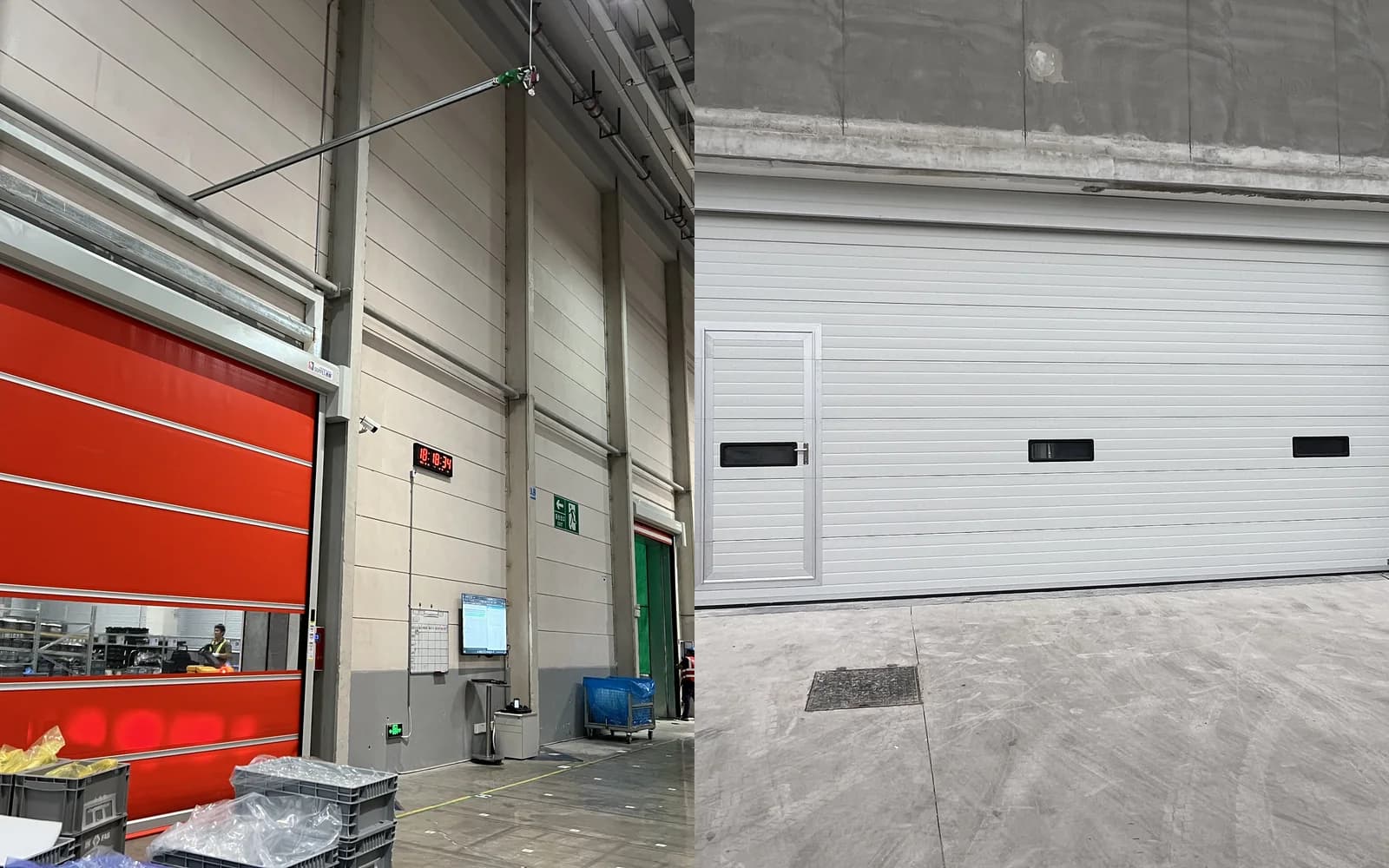
Choose a high-speed door when frequent traffic, short opening time and automated movement are the main priorities. Choose an industrial sectional door when insulation, building closure, security and moderate traffic matter more. Some busy exterior entrances use both: a sectional door for the building envelope and a high-speed door for daily traffic.
Quick answer
Should a warehouse use a high-speed door or an industrial sectional door?
Use a high-speed door for frequent forklift, personnel or automated traffic where the entrance should open briefly and close after each passage. Use an industrial sectional door where the opening forms part of the building envelope and insulation, security and dependable exterior closure are the main requirements. Confirm exposure, traffic, installation space, controls and safety before selecting the final configuration.- High-speed door
- Frequent traffic + separation
- Sectional door
- Insulation + building closure
- Choose by
- Duty, environment and space
- Busy exterior route
- Two-door strategy may fit
Start with the job of the entrance
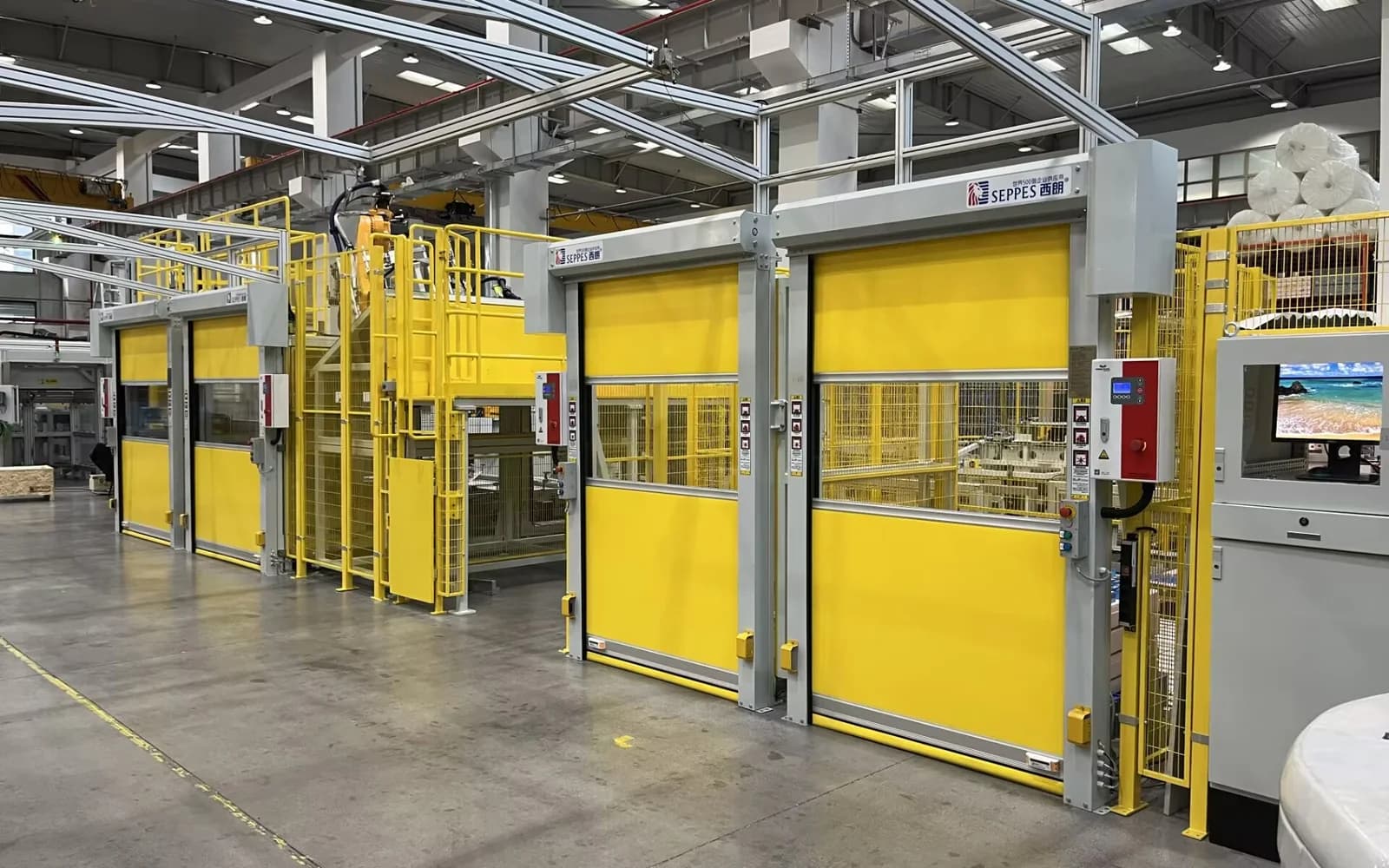
A door at an internal production boundary has a different job from a door in an exterior warehouse wall. The internal opening may cycle repeatedly and needs to support traffic flow and zone separation. The exterior opening may remain closed for longer periods and must contribute to the building envelope.
Before comparing door names, define the result the entrance must achieve: faster material movement, reduced unnecessary open time, thermal separation, exterior closure, security, equipment integration or a combination of these requirements.
- Identify whether the opening is internal, external or between temperature zones.
- Record people, forklifts, AGVs and other traffic using the route.
- Estimate normal and peak operating frequency.
- Define the environmental, security and access-control objectives.
The two door types are designed around different priorities
Use the following comparison as a planning guide. Product-specific performance still depends on the selected model, size, hardware, seals, controls and installation conditions.
| Decision factor | High-speed door | Industrial sectional door |
|---|---|---|
| Primary role | Frequent traffic and environmental separation | Building closure, insulation and security |
| Typical location | Production routes, logistics flow and controlled internal zones | Warehouse façades, loading bays and factory entrances |
| Traffic pattern | Medium to high frequency | Low to moderate frequency |
| Door construction | Flexible curtain or rigid high-speed construction | Hinged insulated panel sections |
| Space review | Roll, drive and side-guide clearances | Headroom, tracks, spring or drive system and ceiling area |
| Control focus | Sensors, automatic closing and equipment signals | Authorized access, open/close controls and building operation |
| Evidence to request | Duty, exposure, safety and environmental performance for the configuration | Panel, sealing, hardware, track and installed performance for the configuration |
Choose a high-speed door for frequent, controlled movement
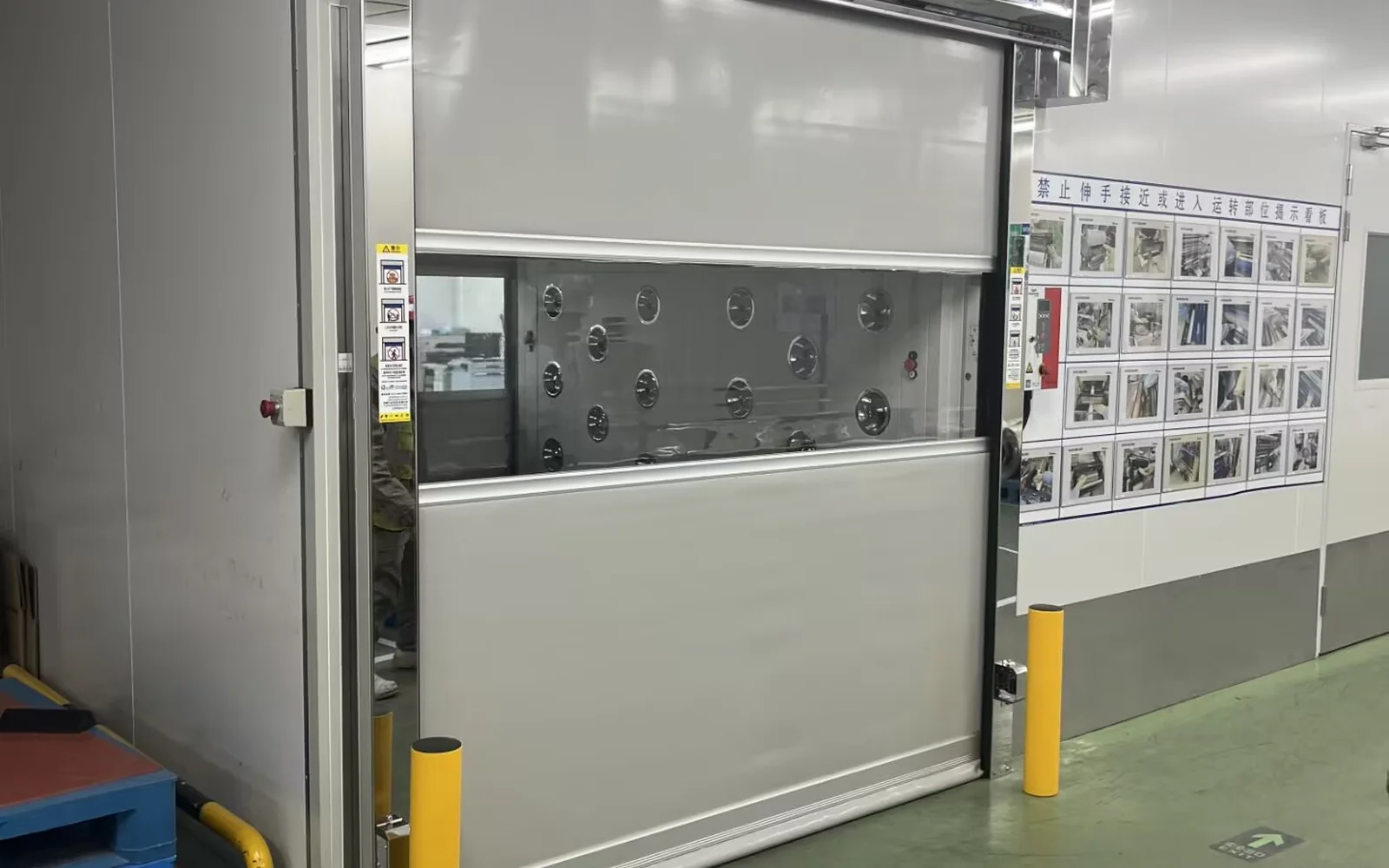
A high-speed door is often suitable where waiting at the entrance interrupts production or logistics. The activation device can request opening as a person, forklift or AGV approaches, and the door can close after the route is confirmed clear. The value comes from the complete operating sequence, not maximum speed alone.
Review detection areas, closing delay, sight lines, mixed traffic and the response to a fault. For automated routes, document request, ready, open-confirmation and fault signals before production. A high-speed door supports separation; it does not replace HVAC, fire protection, extraction or process controls.
Choose a sectional door for the building envelope
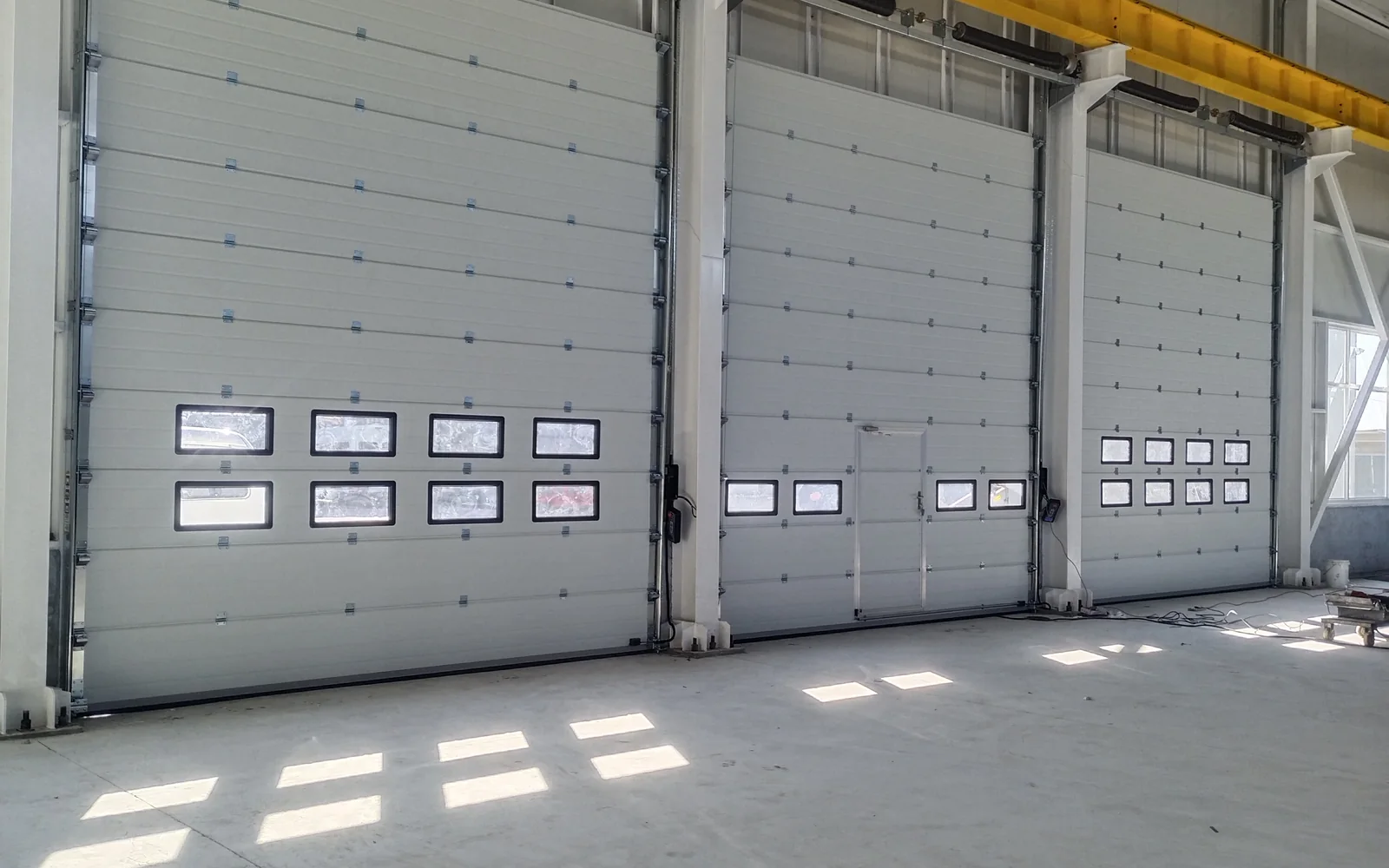
An industrial sectional door is a practical starting point where the entrance is part of an exterior wall and the project prioritizes insulated panels, reliable closure and physical security. The panels travel vertically and then follow a track arrangement selected around the building structure.
Confirm the actual panel construction, perimeter seals, windows, hardware, exposure and operating duty. Insulation and sealing claims should be reviewed against the proposed configuration and applicable evidence; the panel material alone does not describe the performance of the complete installed entrance.
Check the installation space before choosing the door
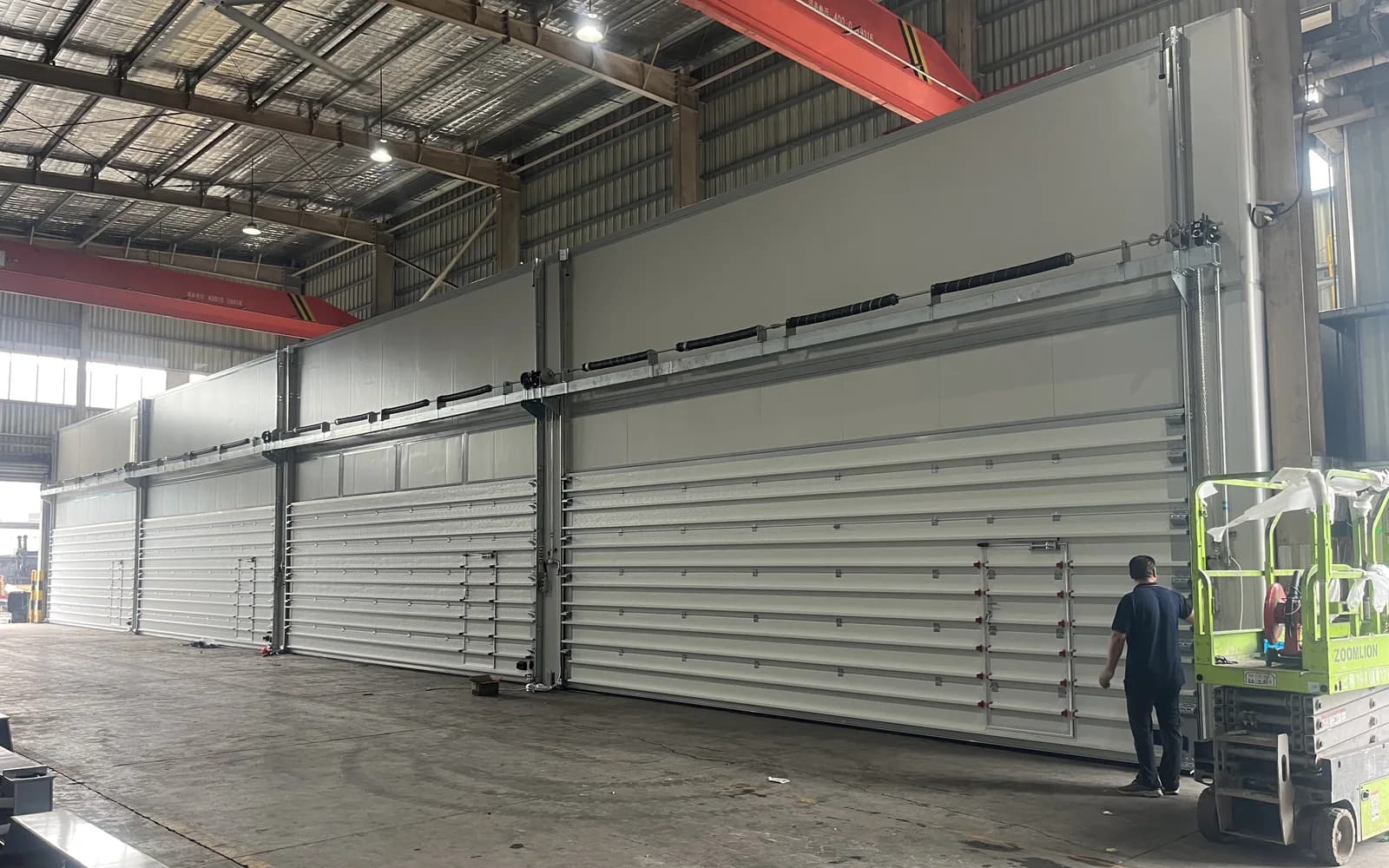
A technically suitable product can still fail the site review when the building does not provide the required space. Record the clear opening, lintel, side room, ceiling height, beams, lighting, pipes, cable routes and nearby equipment before the track or roll arrangement is selected.
Sectional doors may use standard lift, high lift, vertical lift or another project-specific track arrangement. High-speed doors need space for the drive, roll or rigid curtain path and service access. The approved drawing should show fixing surfaces, clearances and responsibility for building preparation.
Some busy exterior openings benefit from two doors
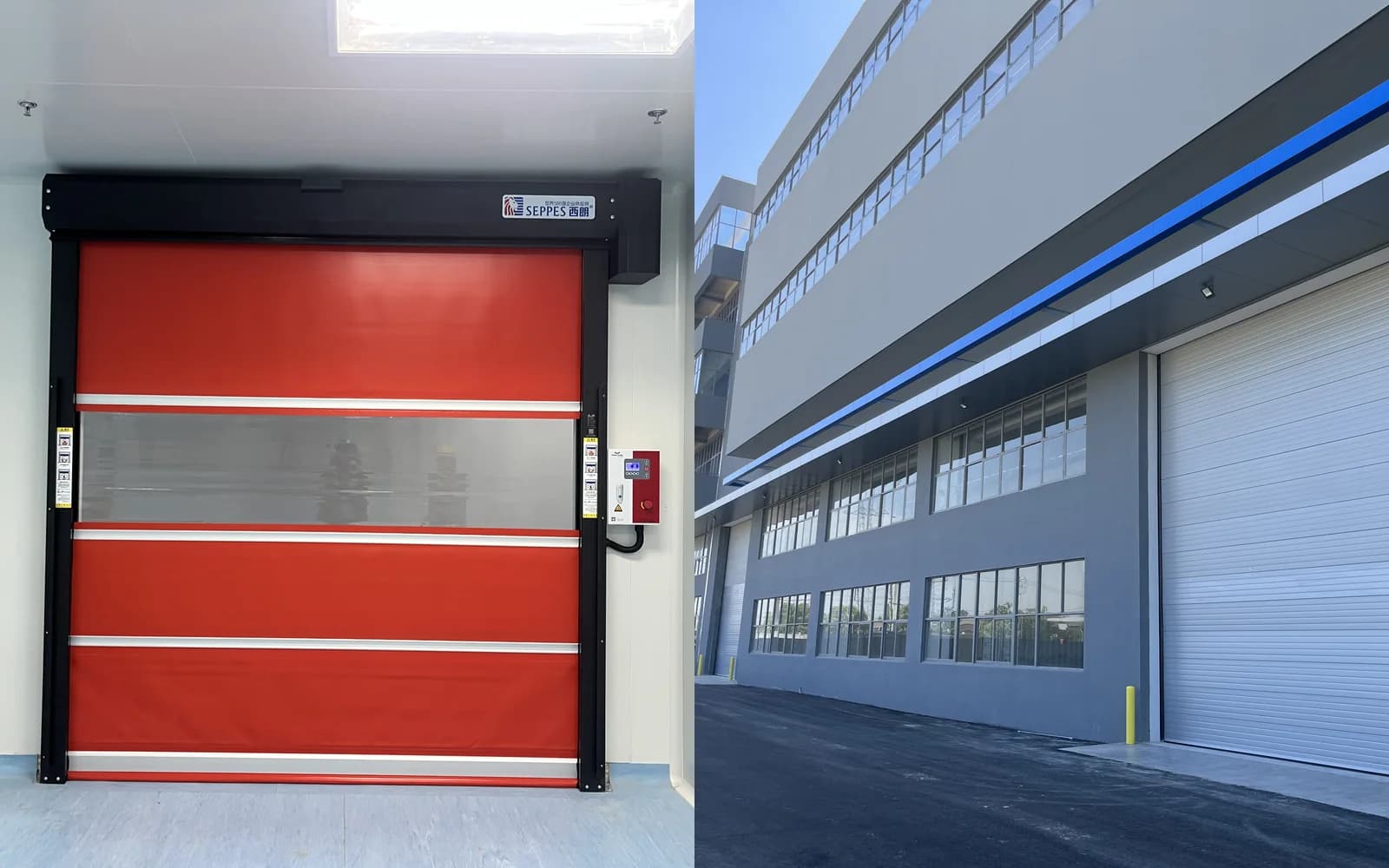
A warehouse may need secure insulated closure when the route is inactive and fast access during working hours. In that situation, a sectional door can form the main building closure while a high-speed door manages frequent daily traffic behind it.
Treat the arrangement as one entrance system. Coordinate the distance between doors, opening sequence, interlock logic, emergency response, vehicle detection and maintenance access. Both doors must not create an unsafe trapped space or conflict with the facility's required escape strategy.
Use a project brief to make the final selection
Give the supplier enough information to connect the door construction, controls and installation arrangement to the actual opening. A model recommendation based only on width and height leaves important risks unresolved.
- Clear opening width and height, headroom, side room and support structure.
- Indoor or outdoor location and the expected weather or wind exposure.
- Personnel, forklift, pallet-truck, AGV or equipment traffic.
- Normal and peak operating frequency and periods when the opening remains inactive.
- Temperature, dust, airflow, security or environmental-separation objective.
- Required activation, access control, equipment signals and warning devices.
- Safety assessment, emergency operation and authorized recovery requirements.
- Project location, quantity, photographs, drawings and document requirements.
Plan the entrance with SEPPES
SEPPES supplies high-speed doors and industrial sectional doors for manufacturing, warehousing, logistics and controlled industrial environments. The project review can coordinate the door family, dimensions, track or guide arrangement, controls, safety devices and supporting documents around the confirmed application.
Send the opening dimensions, application, traffic, environmental objective, control requirements, quantity, project location and available photos or drawings. SEPPES can then compare the two door families and prepare a configuration for technical review without relying on a one-size-fits-all recommendation.
High-Speed and Sectional Door Selection Questions
Which door is better for frequent forklift traffic?
A high-speed door is usually the stronger starting point for frequent forklift traffic because the operating sequence can be configured around approach detection, clear-opening confirmation and automatic closing. The final selection still depends on the opening, traffic speed, exposure and required protective functions.
Which door provides better insulation?
An industrial sectional door with insulated panels is generally considered where thermal separation and building closure are primary requirements. Ask for the applicable panel, perimeter-seal and installed-door performance evidence for the proposed configuration rather than relying on a general product-family claim.
Can a high-speed door be used on an exterior opening?
Yes, when the selected construction is suitable for the opening size, exposure, wind conditions, security demand and operating duty. A flexible internal rapid door should not automatically be specified for an exposed exterior entrance.
Can a facility install both door types at one opening?
Yes. Some projects use an industrial sectional door for secure or insulated closure during inactive periods and a high-speed door for frequent daytime traffic. The spacing, controls, interlocks, emergency access and maintenance clearances must be coordinated.
What information is needed before selecting either door?
Provide the clear opening, headroom, side room, support structure, indoor or outdoor location, traffic type and frequency, environmental objective, exposure, safety requirements, control interfaces, project location and available drawings or photos.
FROM REQUIREMENTS TO CONFIGURATION
Bring your project into focus.
Share the opening dimensions, quantity, application, traffic, environment, controls, location and available drawings.
Discuss your requirementsRelated solution