
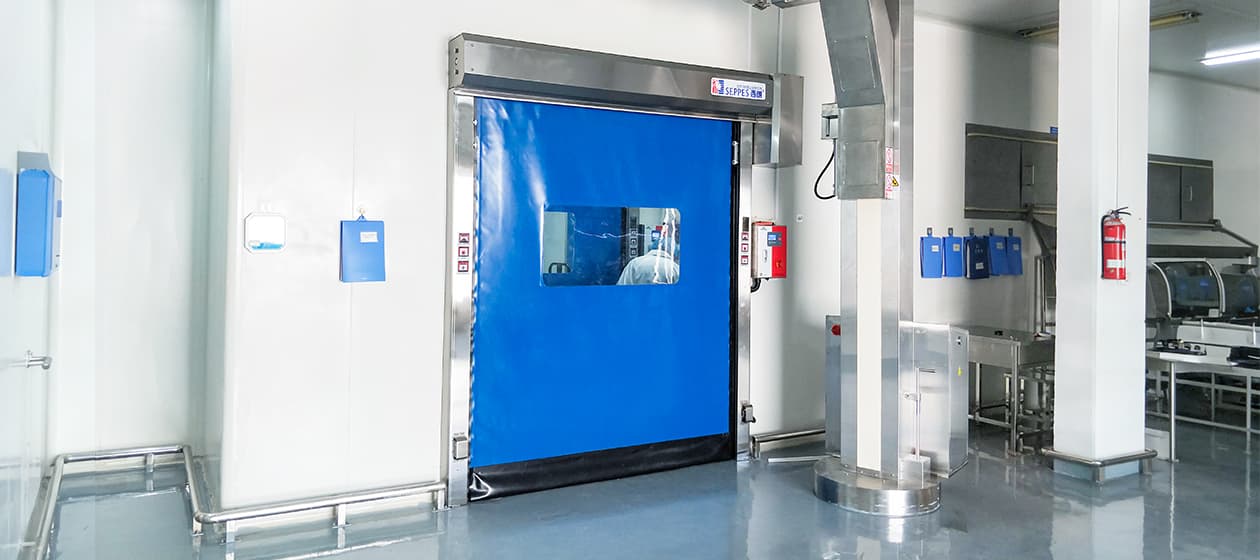
Raw-material entrances in food production facilities must support frequent movement without leaving processing areas continuously exposed. A correctly configured high-speed roll-up door shortens the time the entrance remains open, helps limit dust and airborne contaminants moving between zones, and allows personnel, pallet trucks and forklifts to pass with less waiting. The door should be selected as part of the facility's wider hygiene and material-flow system. It supports environmental separation but does not replace filtration, extraction, pressure control, pest management or established cleaning procedures.
Quick answer
How can a high-speed roll-up door improve a food material entrance?
A correctly configured high-speed roll-up door shortens the time a raw-material entrance remains open, helps limit dust transfer between zones and reduces waiting for people, forklifts and AGVs. Its sealing, activation and safety configuration should be coordinated with the facility's wider hygiene and air-management systems.- Primary objective
- Dust-transfer control
- Traffic fit
- People, forklifts & AGVs
- Control focus
- Activation + closing logic
- System boundary
- Supports facility hygiene
Why raw-material entrances are difficult to control
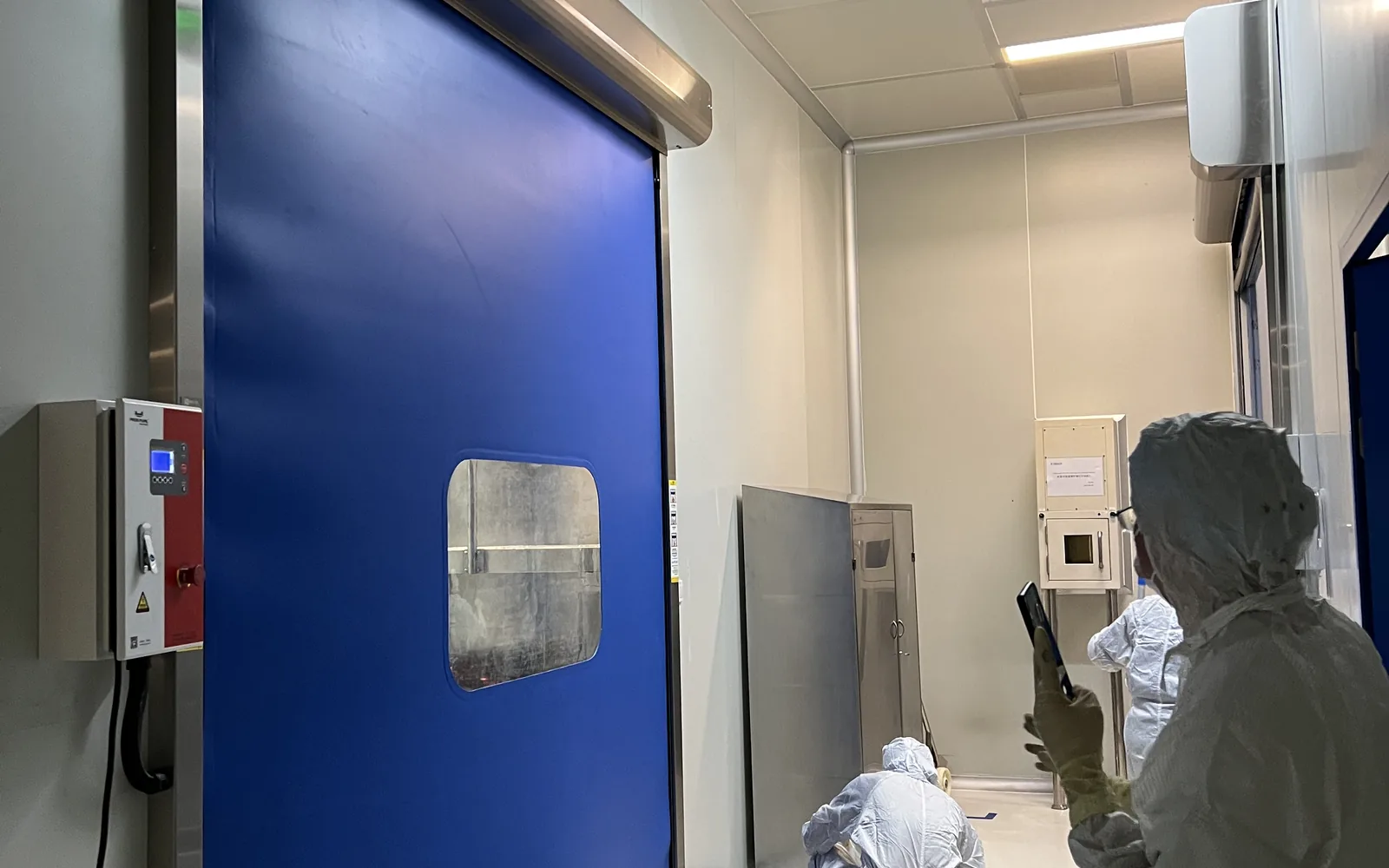
A raw-material route can connect receiving, storage, preparation and processing areas. Every door cycle temporarily removes the physical separation between these zones.
These problems are rarely solved by selecting the fastest available door alone. Opening size, traffic direction, operating frequency, detection range, closing delay and safety devices must work together.
- Dust from packaging, pallets or raw materials moves into cleaner production areas
- Conventional doors remain open because manual operation slows the workflow
- Forklifts stop and wait for the door, causing queues around the entrance
- Employees leave the door open during repeated material transfers
- Temperature and humidity become more difficult to manage
- An unsuitable sensor opens the door when no authorized passage is required
- Poor visibility increases interaction risks between pedestrians and vehicles
How a high-speed roll-up door supports dust control
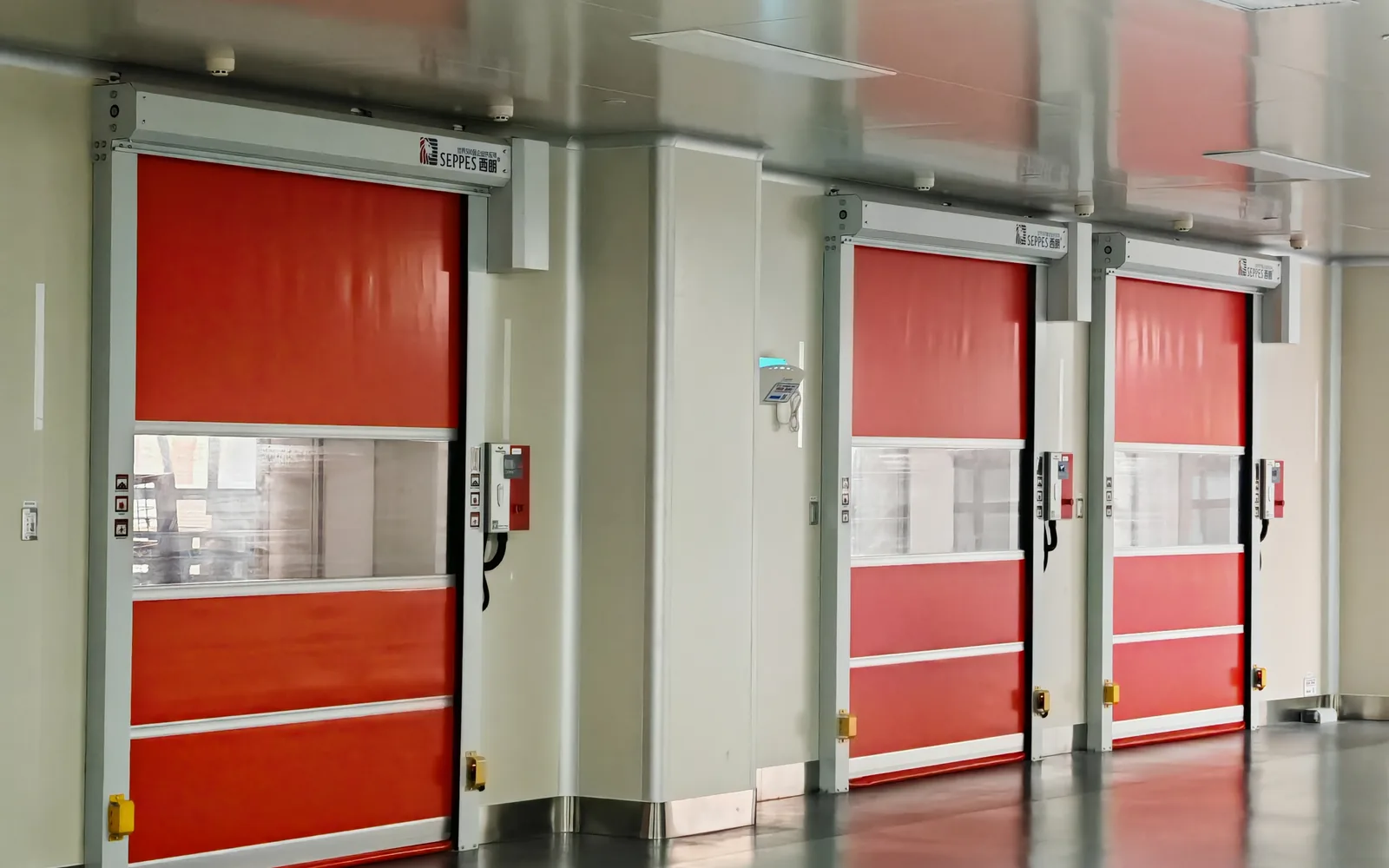
The main benefit of a high-speed roll-up door is a shorter and more predictable exposure period.
When a person or vehicle approaches, the selected activation device sends an opening signal. After the passage is clear, the door closes automatically. This reduces dependence on manual operation and helps the entrance return to its separated state after every movement.
Shorter open time
A conventional door may remain open throughout a material-handling task. A rapid door opens for each passage and closes when the route is clear.
Reducing the open interval can help limit the movement of dust, insects and untreated air between adjacent areas. The final operating speed and closing delay should be configured around the actual traffic pattern rather than set to the maximum available value.
Improved perimeter separation
The curtain, guide structure and bottom edge should form a coordinated sealing system. Side brushes or other guide-sealing arrangements can help reduce gaps around the curtain, while a flexible bottom edge can accommodate reasonable floor variation.
The expected result depends on the floor condition, doorway dimensions, air-pressure difference and type of dust present. These conditions should be reviewed before the door is specified.
Automatic closing
Automatic closing prevents the entrance from remaining open simply because operators are busy or repeated movements are expected.
The delay must still provide enough time for the person, pallet truck or forklift to clear the opening safely. A delay that is too long reduces separation, while one that is too short can interrupt traffic.
Selecting an activation method for the material route
The activation method determines when the door opens and which movements trigger it.
A sensor with an oversized detection zone may open the door when people or vehicles are only passing nearby. A detection zone that is too small may force forklift drivers to stop before the entrance.
For mixed pedestrian and forklift traffic, separate activation methods or clearly defined routes may be required. The decision should follow a site-specific traffic and safety assessment.
- Radar detection for hands-free vehicle or personnel access
- Induction loops for defined forklift routes
- Pull cords for deliberate operator control
- Push buttons for controlled personnel passage
- Remote controls for designated operators
- Access-control signals for restricted production areas
- I/O or communication interfaces for conveyors and automated equipment

Improving traffic efficiency without weakening control
A well-planned rapid door should open early enough for smooth passage and close after the route is safely clear. This creates a repeatable movement sequence instead of relying on individual operators.
Signal type, opening permission, closing logic, fault response and commissioning responsibility should be documented before production.
Where stronger separation is required, two doors may be interlocked so that one cannot open until the other has closed. The safety release and emergency operating sequence must be defined for the individual facility.
- Automated guided vehicles
- Conveyors
- Production equipment
- Access-control systems
- Warning lights and alarms
- Interlocked doors
- Air curtains
- Building or production control systems
Safety requirements for a busy food-production entrance
Faster movement must be supported by suitable detection and protection.
Depending on the opening and traffic conditions, a rapid door configuration may include infrared photocells, a safety edge, warning devices or additional presence detection. Transparent vision sections can improve awareness between people approaching from opposite sides.
Safety devices should be selected for the actual application and verified during commissioning.
- Pedestrian and vehicle traffic
- Vehicle height and approach direction
- Forklift stopping distance
- Visibility around the doorway
- Operating frequency
- Emergency procedures
- Nearby production equipment
- Cleaning and maintenance access

Hygiene and system limitations
A high-speed roll-up door can support a food facility's zoning strategy, but it should not be described as a complete dust-control or food-safety solution.
Extraction, filtration, room pressure, cleaning procedures, pest management and production discipline remain important. If the facility requires a hygienic, wash-down, cleanroom, fire-rated or explosion-protected entrance, the relevant material, construction and certification requirements must be confirmed separately.
Curtain material, frame finish and cleaning compatibility should also be reviewed against the facility's sanitation procedures and applicable local requirements.
Information needed before selecting the door
Providing complete project information allows the manufacturer to configure the entrance around the real process. This information is more useful than requesting a standard door based only on the opening dimensions.
- Clear opening width and height
- Number of required doors
- Indoor or outdoor installation
- Raw materials and packaging passing through the opening
- Personnel, pallet-truck, forklift or AGV traffic
- Estimated operating frequency
- Main dust, insect, airflow or temperature-control objective
- Temperature or pressure difference between zones
- Required activation method
- Safety and access-control requirements
- Available installation space
- Required signals from conveyors or production equipment
- Site photos, drawings or a short traffic-route video
Why consider a SEPPES high-speed door?
SEPPES develops industrial entrance solutions for manufacturing, warehousing, logistics and controlled production environments.
For a food-production material route, the door can be configured around the opening, traffic pattern, environmental separation objective, activation method and required automation interfaces. The project approach considers the complete access point rather than treating the door as an isolated product.
SEPPES is positioned as a mid-to-high-end Chinese industrial door brand for international projects. Its value is built around application-based engineering, consistent manufacturing, configurable entrance systems and responsive project support.
Plan a more controlled raw-material route
If dust transfer, long waiting times or doors left open are affecting your raw-material entrance, send SEPPES the opening dimensions, traffic type, operating frequency and available site photos.
Our team can review the route and recommend a high-speed roll-up door configuration based on your production environment, activation requirements and safety conditions.
Food Material Access Questions
Can a high-speed roll-up door completely prevent dust?
No. It can help reduce dust transfer by shortening the open interval and improving doorway separation. Extraction, filtration, pressure management and cleaning procedures must address the wider environmental-control requirement.
Is this door suitable for forklift traffic?
Yes, provided that the opening size, activation method, detection zone, visibility and safety devices are configured around the forklift route.
Can personnel and forklifts use the same entrance?
They can, but mixed traffic may require separate detection methods, warning devices, barriers or route-management measures following a site-specific safety assessment.
Can the door connect with an AGV or conveyor?
Yes. Reserved control interfaces can support agreed signals from AGVs, conveyors and production equipment. The communication method and operating logic should be confirmed before production.
What information is needed for a proposal?
Provide the opening width and height, quantity, application, traffic type, operating frequency, environmental objective, required controls, project location and available photos or drawings.
Related solution